Forms to Preserve Concepts, 2026
Back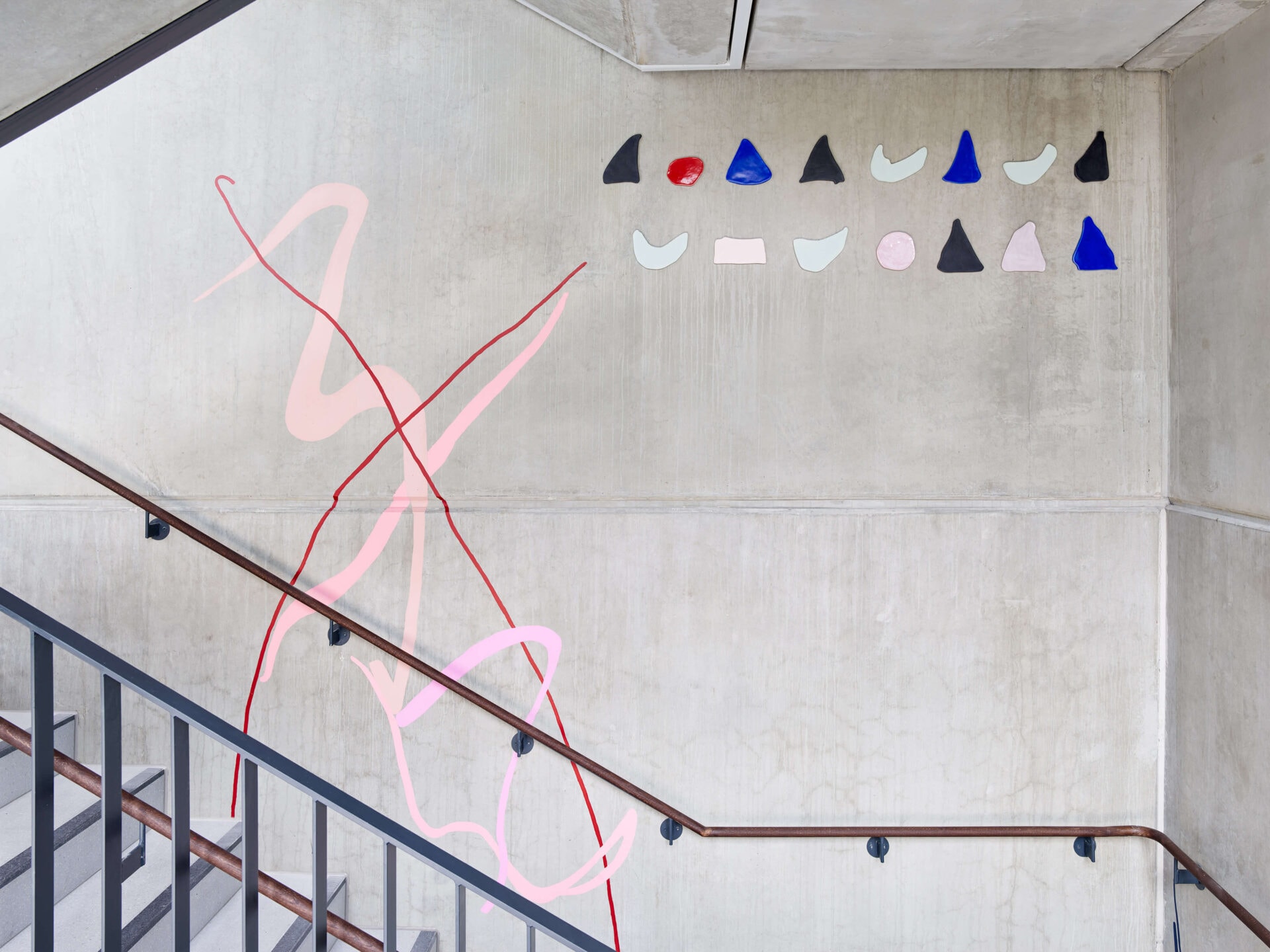
I still have a few books from my school days.
They’re old and there are lots of underlined passages.
There’s a colour-coded hierarchy. The text is underlined in pencil, with a yellow and with a blue highlighter. Some words are marked in pink, others in orange.
On the first few pages of my books, I used a ruler to underline; later, I just used my hand. The lines become irregular.
It’s interesting to see in the underlining what I considered most important, and to realise as an adult what I actually learnt, what I’ve forgotten and what I didn’t underline.
These lines reveal my determination to learn.
I have observed current learning methods amongst primary school pupils in Berlin.
As computers are increasingly used for learning, comments and markings are made in standard formats. The gestures, autonomy and uniqueness of each child’s expression are lost and are limited to the possibilities offered by a keyboard. However, alongside the use of computers, some children also learn through photocopies and workbooks. Here, they have the opportunity to underline, highlight and draw freely.
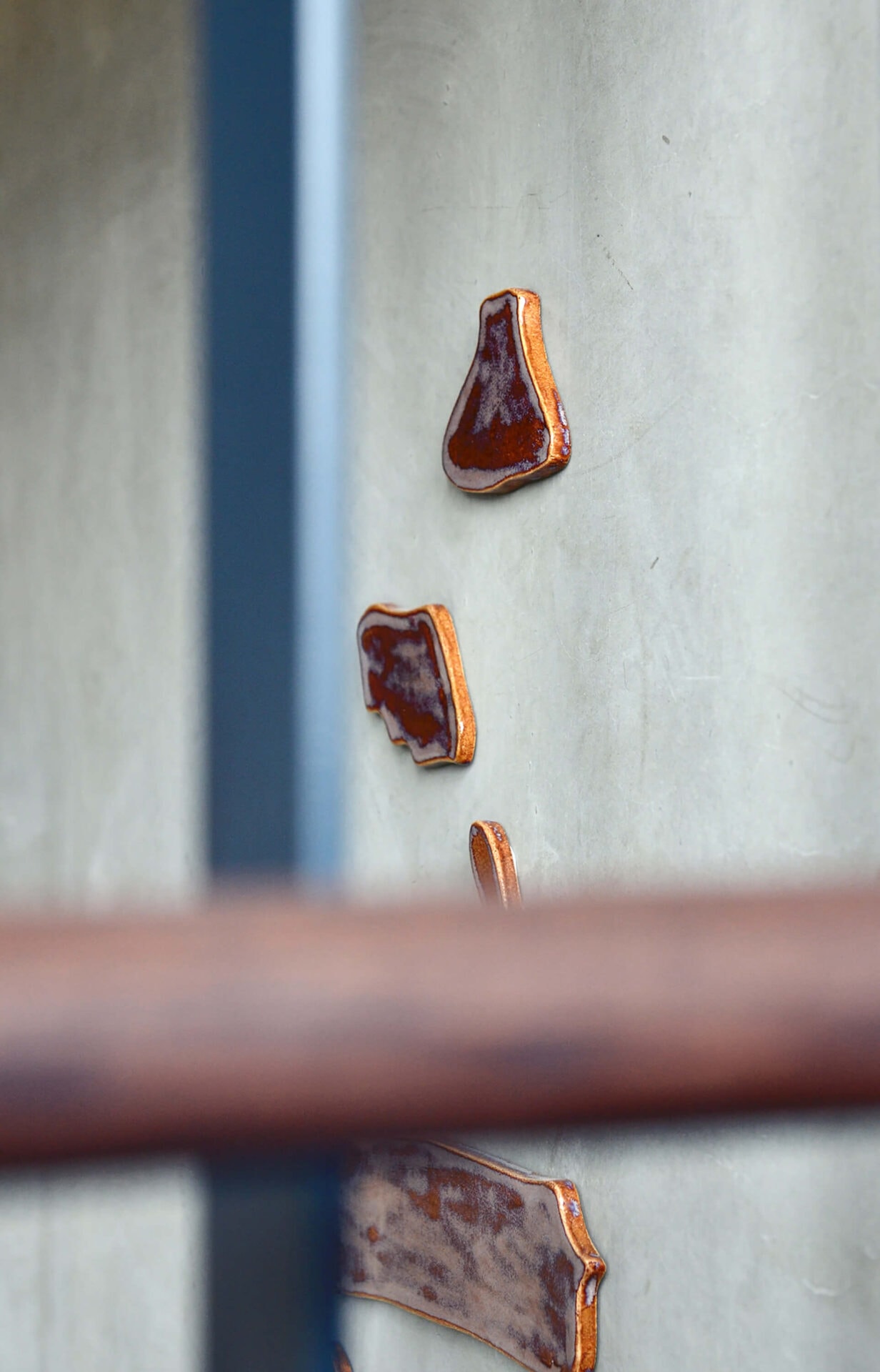
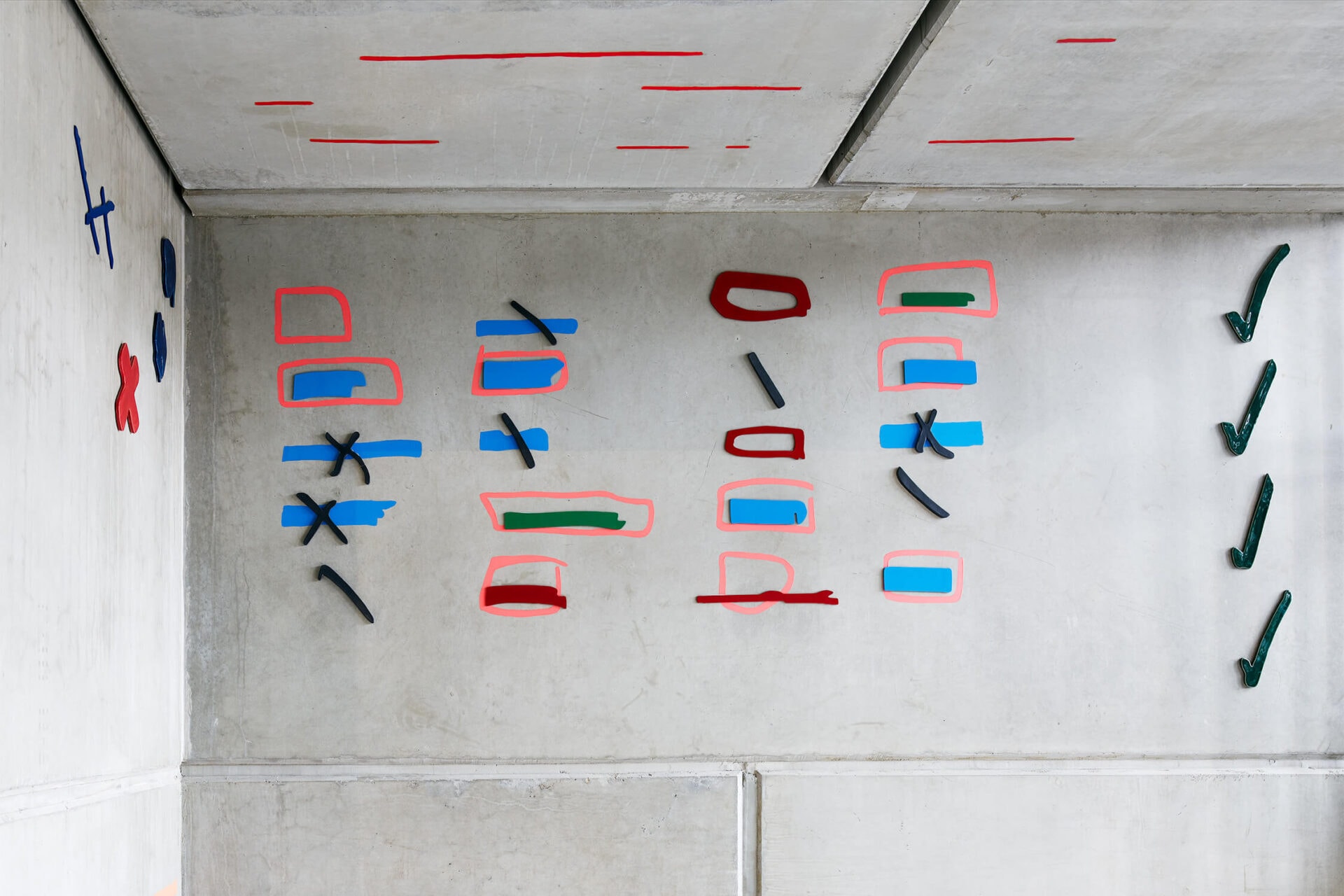
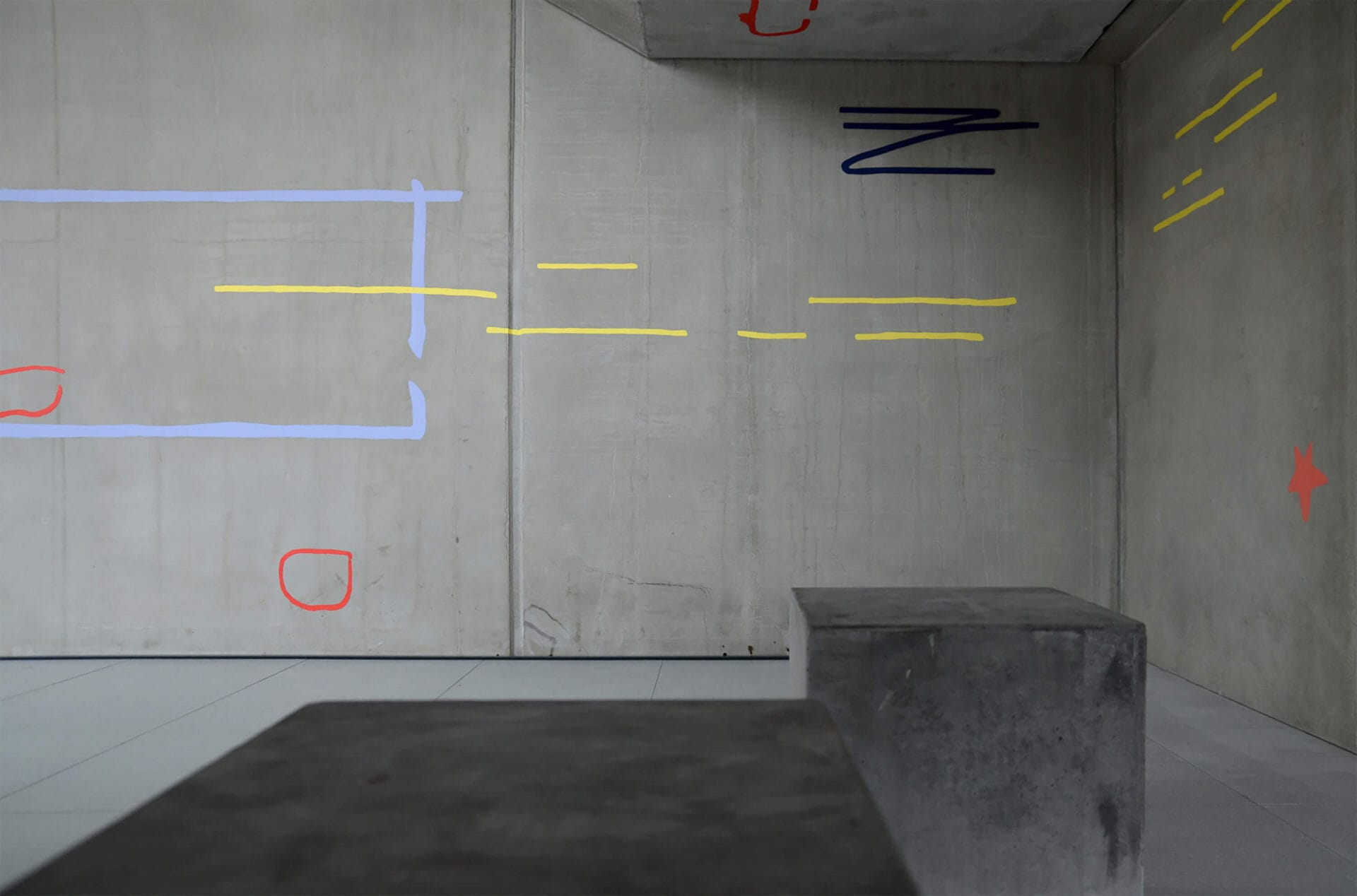
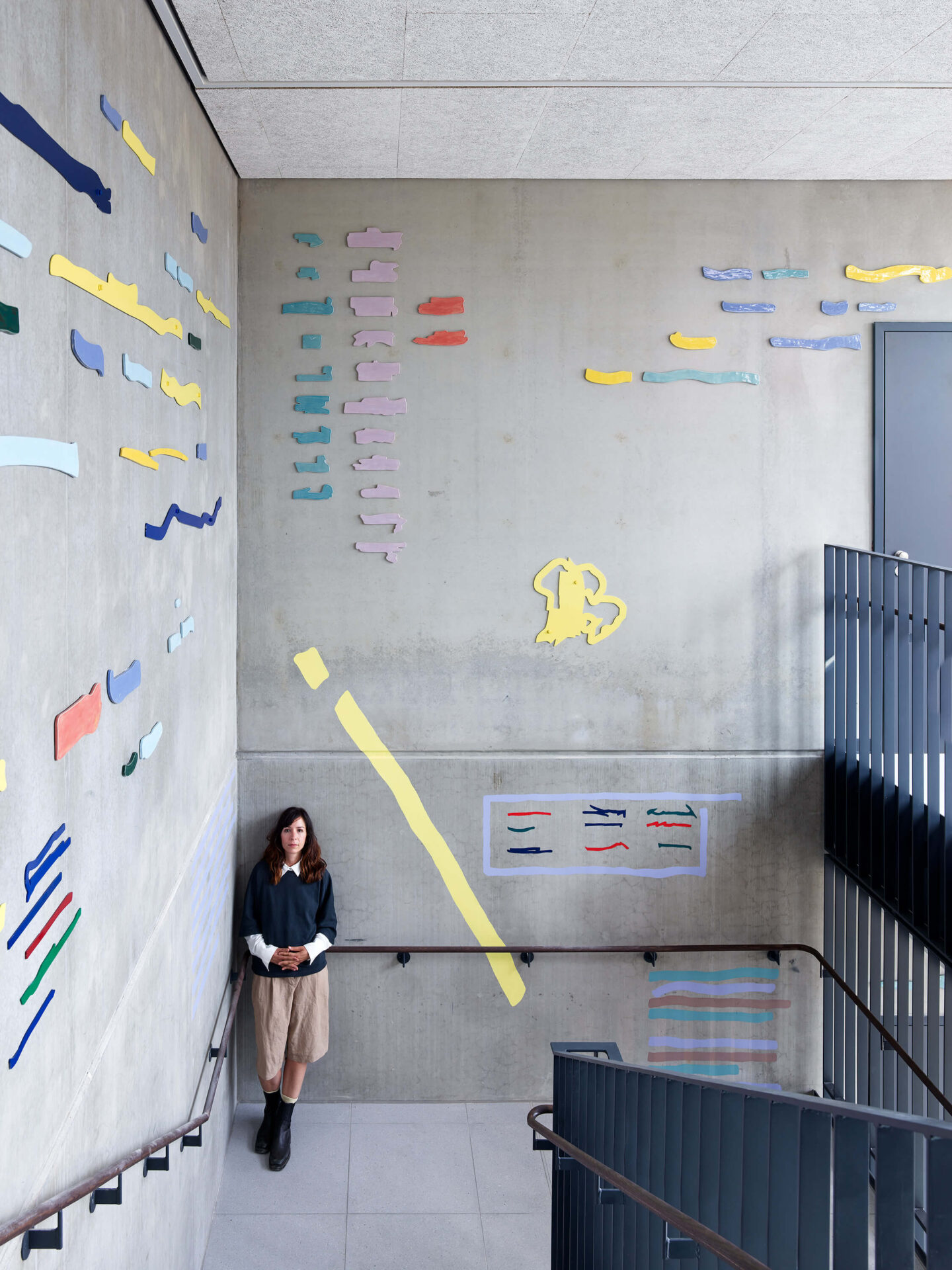
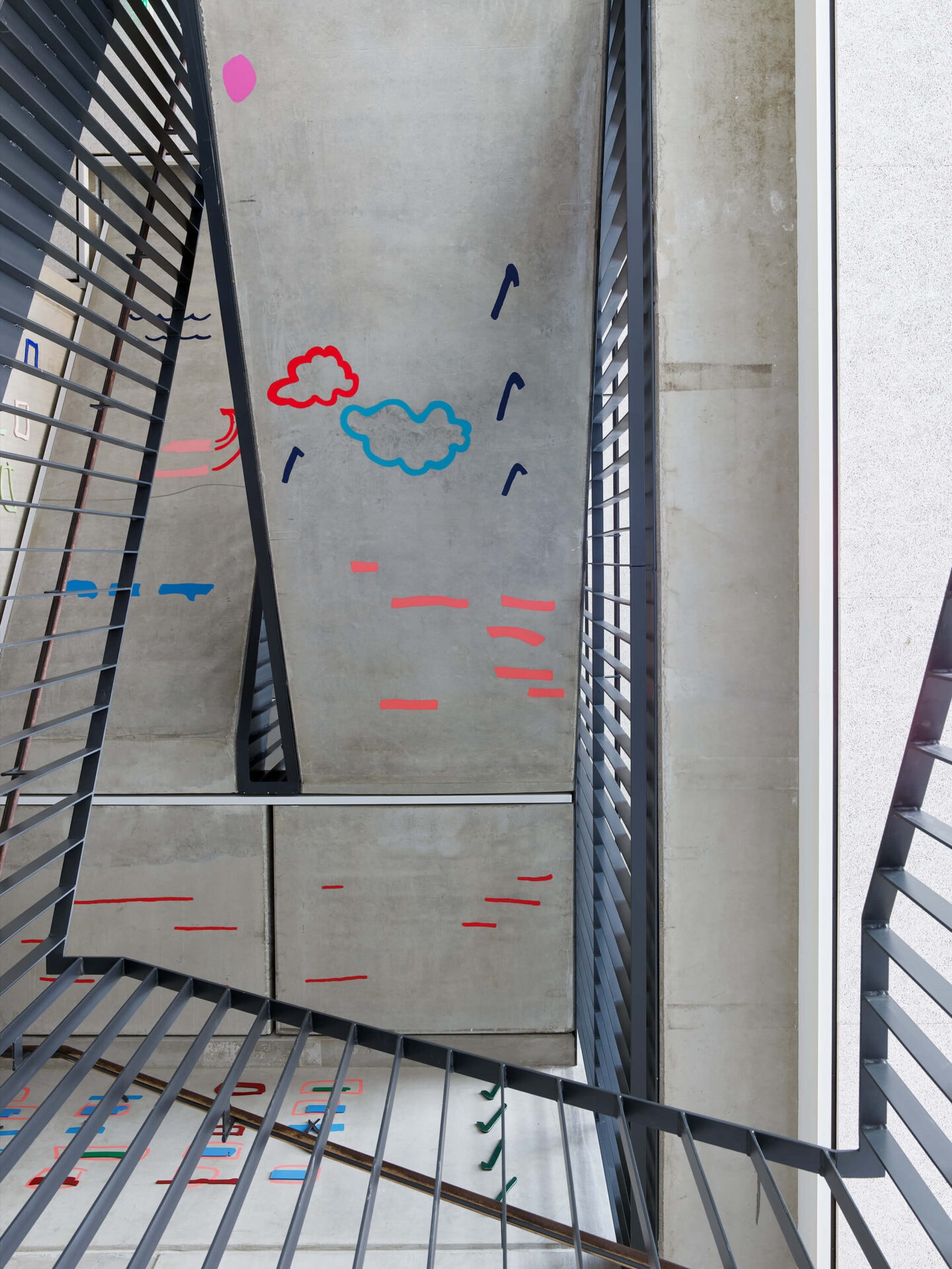
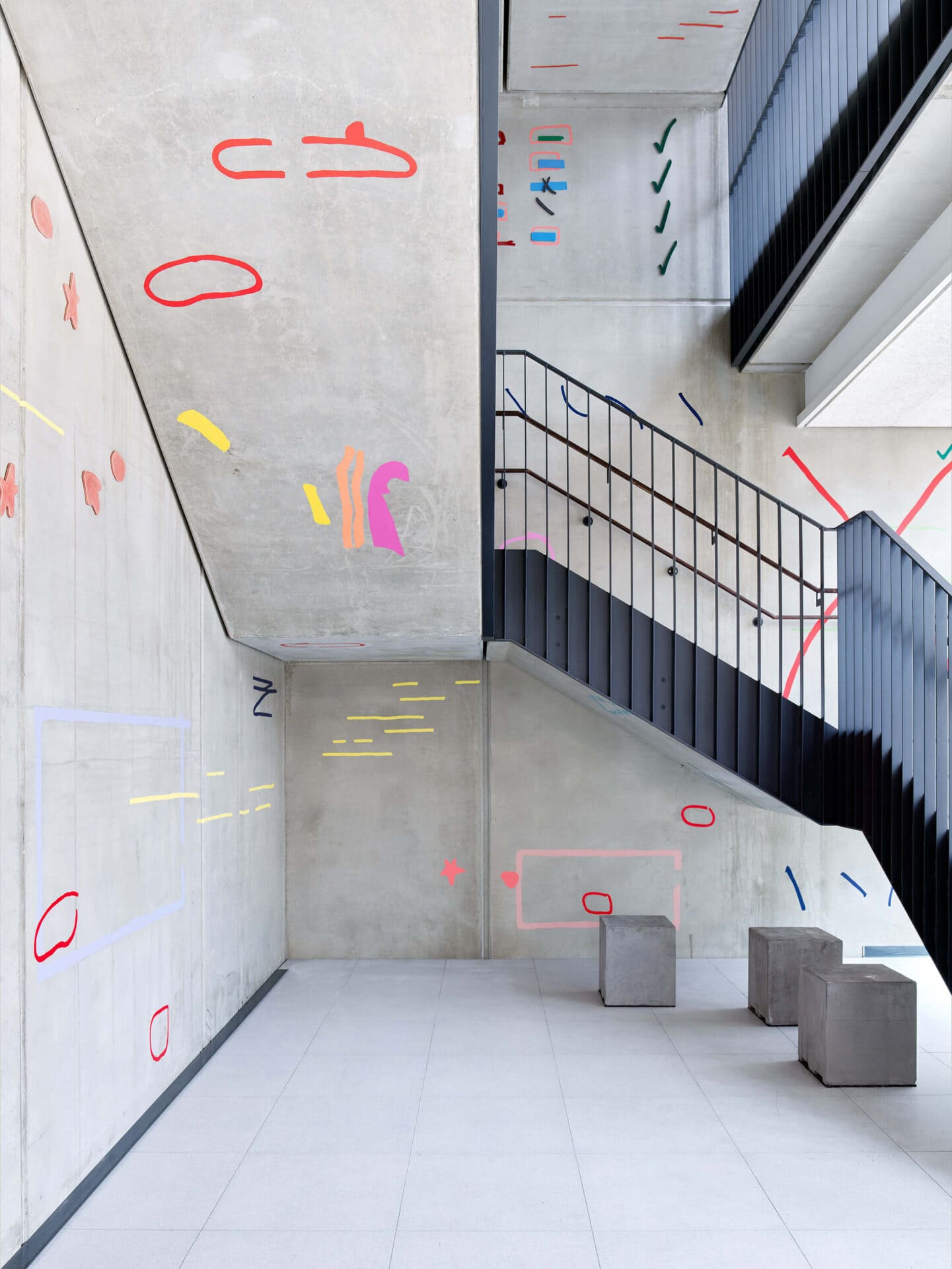
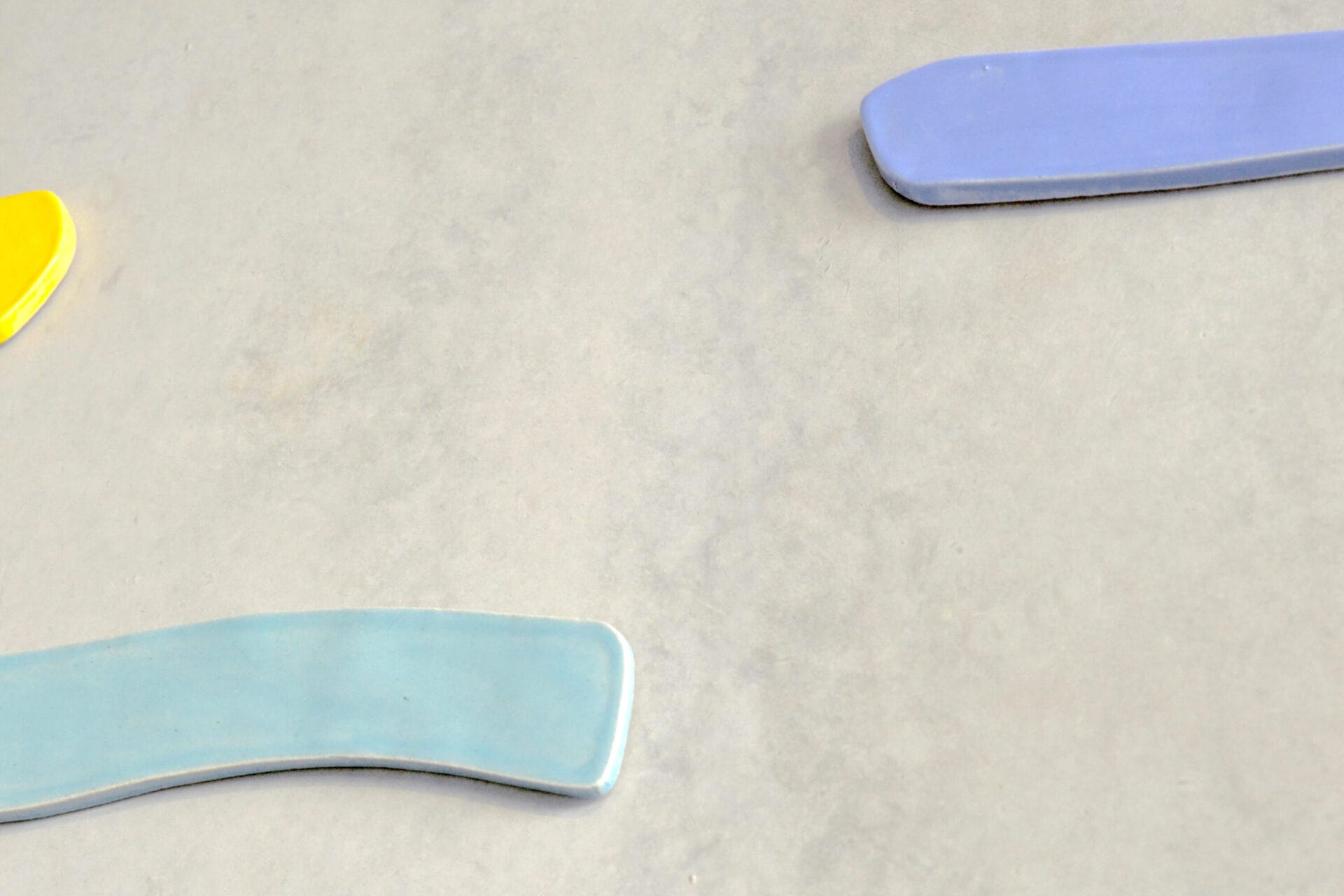
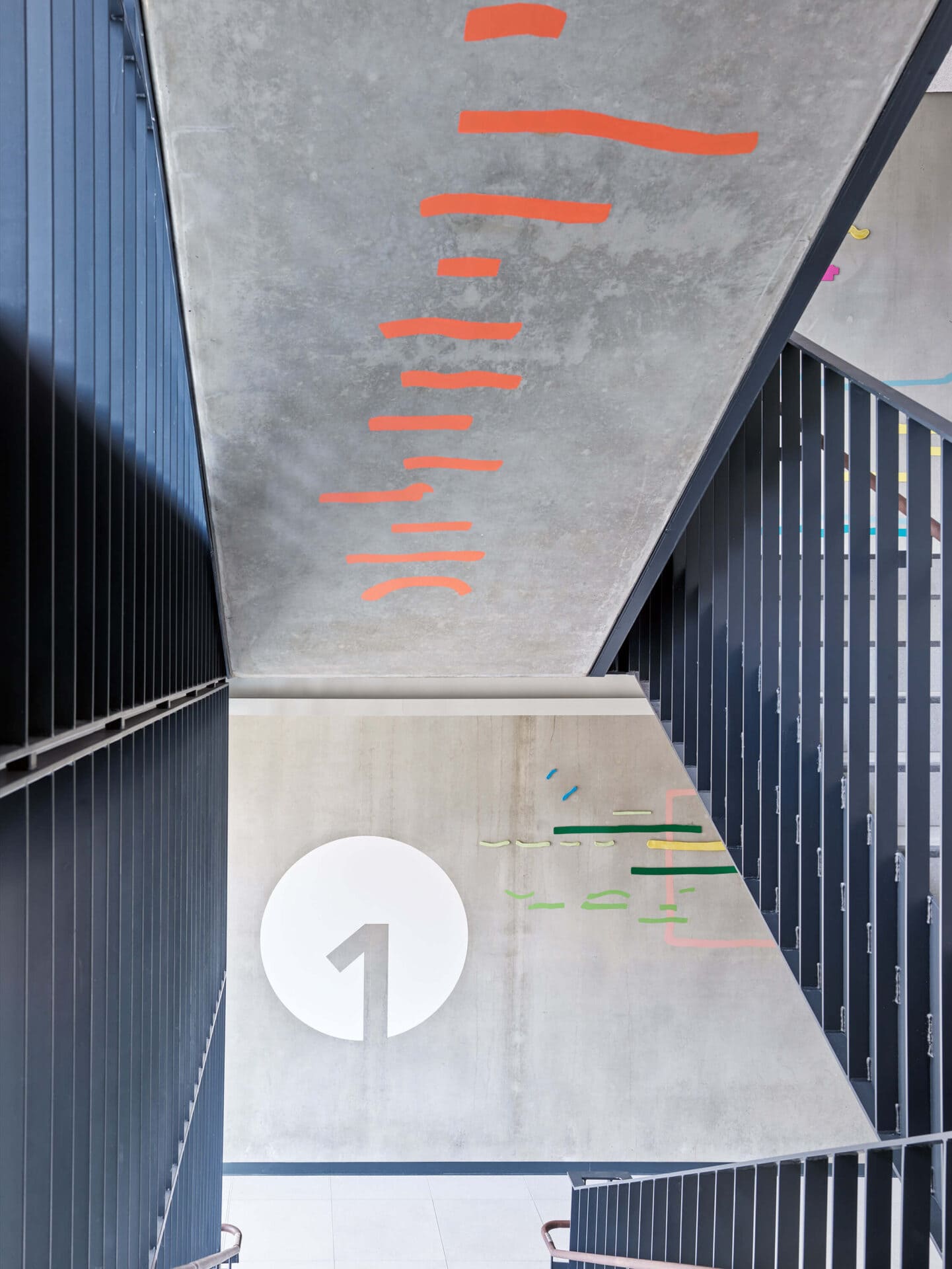
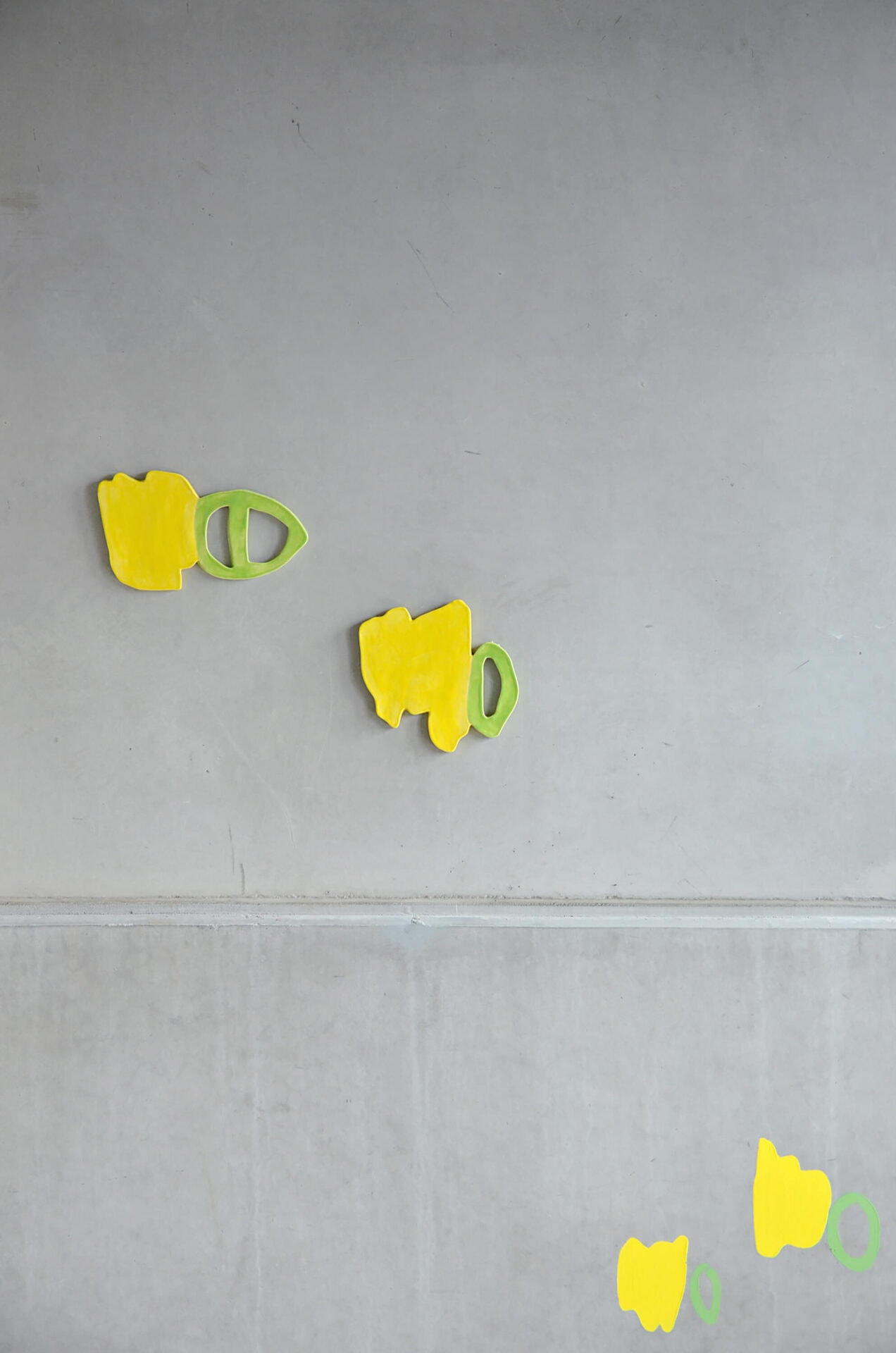
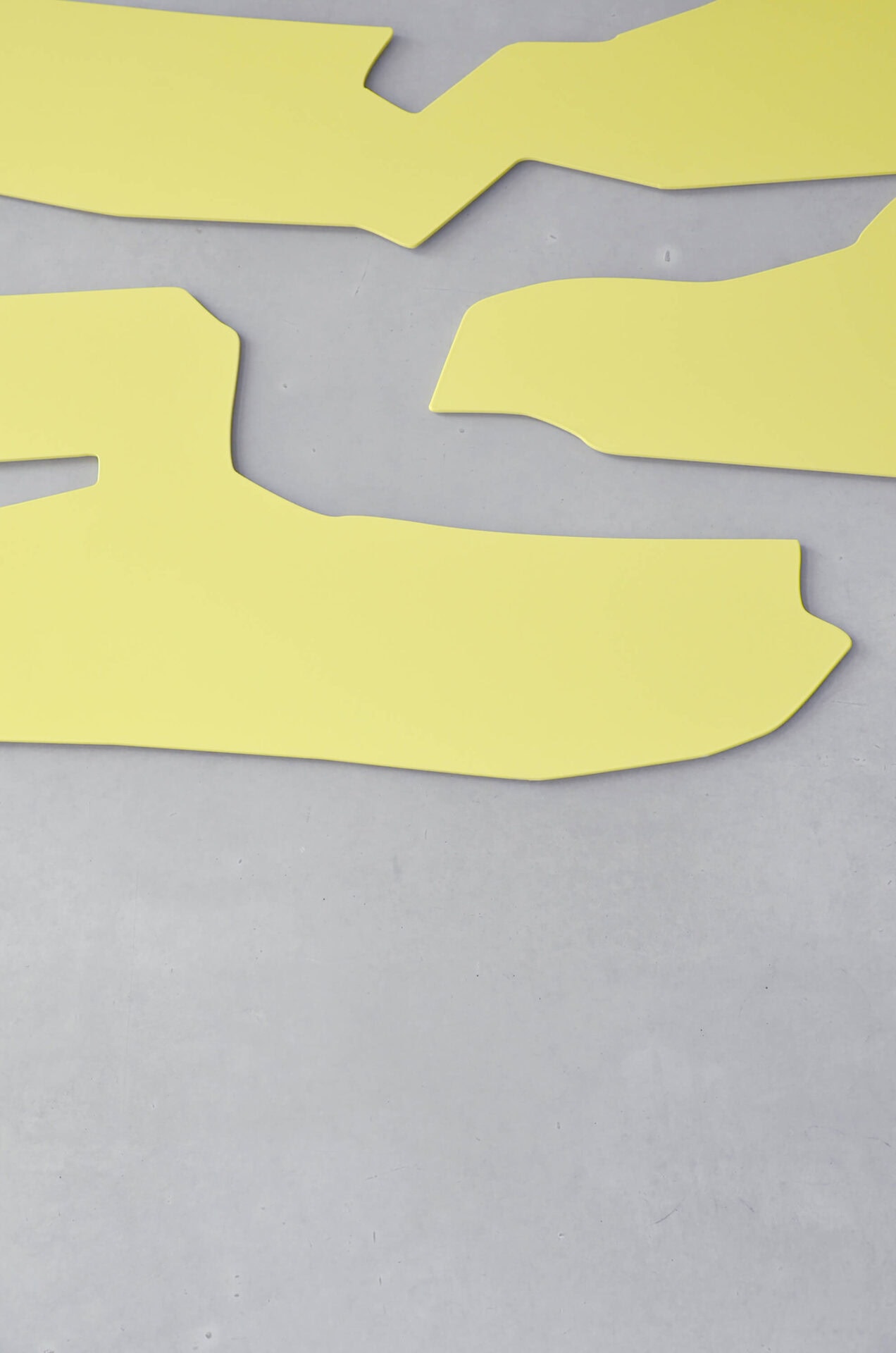
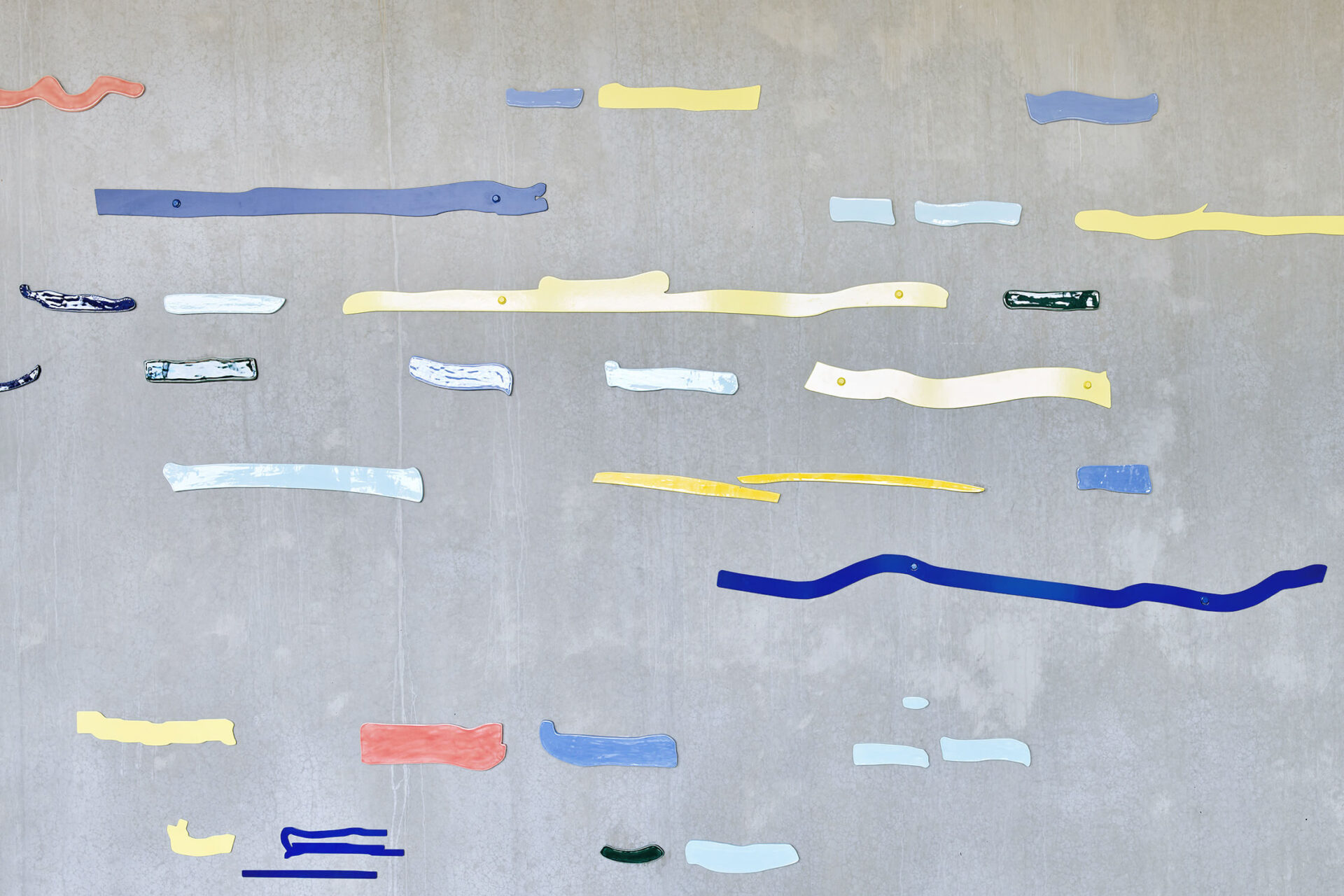
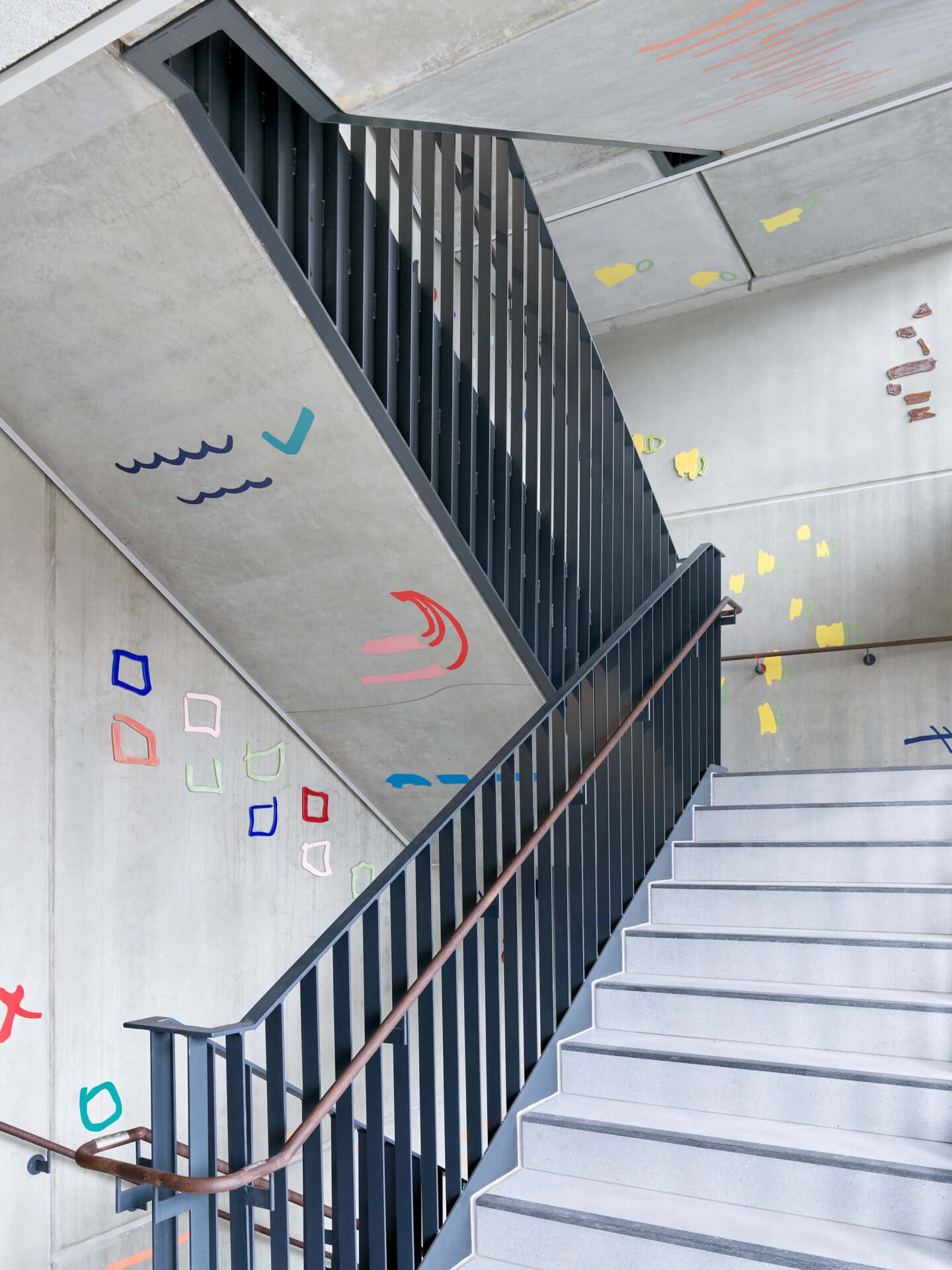
‘Forms to Preserve Concepts’ is a recreation of learning lines and markings, which represent gestures of a willingness to learn.
The irregular lines and shapes, as well as the handmade quality, contrast with the rigidity and perfection of the architecture in which it is found. This highlights the importance of learning with non-standardized tools and the expressive value of hand-drawn underlines and doodles during the learning process.
This project was commissioned by Berlin Senat and the district of Köpenick and it is part of the “Kunst am Bau” program for art in public architectural spaces in Berlin.
/Deutsch/
Ich habe noch einige Bücher aus meiner Schulzeit. Sie sind alt und Vieles ist unterstrichen.
Es gibt eine Farblernhierarchie. Die Texte sind mit Bleistift, mit einem gelben Marker und mit einem blauen Marker unterstrichen. Einige Wörter sind mit einem rosafarbenen Marker hervorgehoben, andere mit einem orangefarbenen.
Auf den ersten Seiten meiner Bücher habe ich mit einem Lineal unterstrichen, später nur mit der Hand. Die Linien werden unregelmäßig.
Es ist interessant, in dem Unterstrichen zu sehen, was ich für das Wichtigste hielt, und mir als Erwachsener bewusst zu machen, was ich tatsächlich gelernt habe, was ich vergessen habe und was ich nicht unterstrichen habe.
Anhand dieser Linien lässt sich mein Wille zum Lernen erkennen.
Ich habe aktuelle Lernmethoden bei Schülern der Grundschule in Berlin beobachtet.
Da Computer zunehmend zum Lernen eingesetzt werden, erfolgen Kommentare und Markierungen in Standardformaten. Die Gestik, Autonomie und Einzigartigkeit des Ausdrucks jedes Kindes gehen verloren und sind auf die Möglichkeiten beschränkt, die eine Tastatur bietet. Doch neben der Verwendung des Computers lernen die meisten Kindern auch durch Fotokopien und Übungshefte. Hier haben Sie die Möglichkeit zu unterstreichen, zu markieren und zu zeichnen.
Formen, die Konzepte bewahren ist eine Nachbildung dieser Linien und Markierungen, die Gesten der Lernbereitschaft darstellen, die die Bedeutung des Lernens mit nicht standardisierten Hilfsmitteln hervorheben und den Ausdruckswert von handschriftlichen Unterstreichungen und ablenkenden Zeichnungen während des Lernens betonen.
