Das Kiez Monument, 2019
Back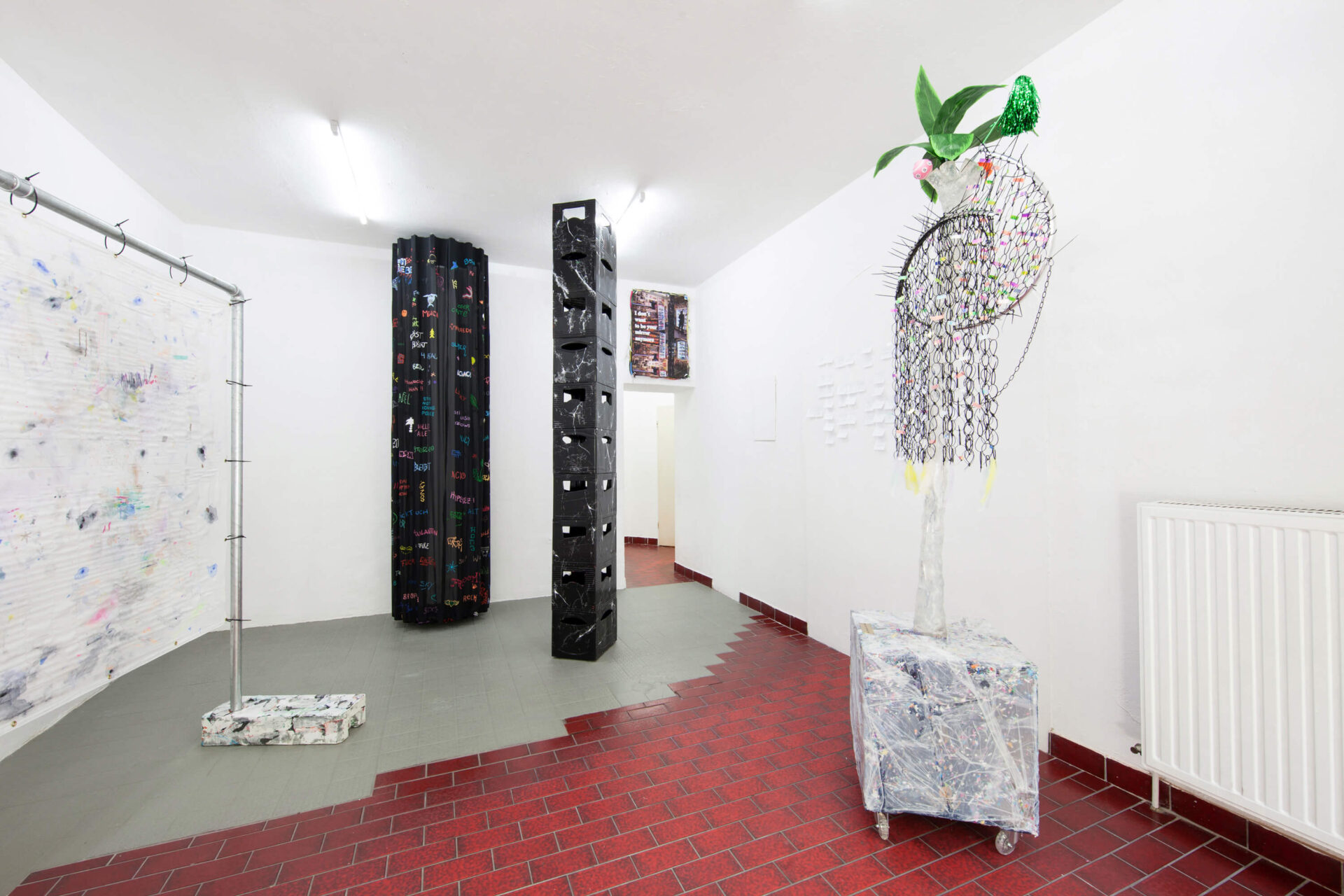
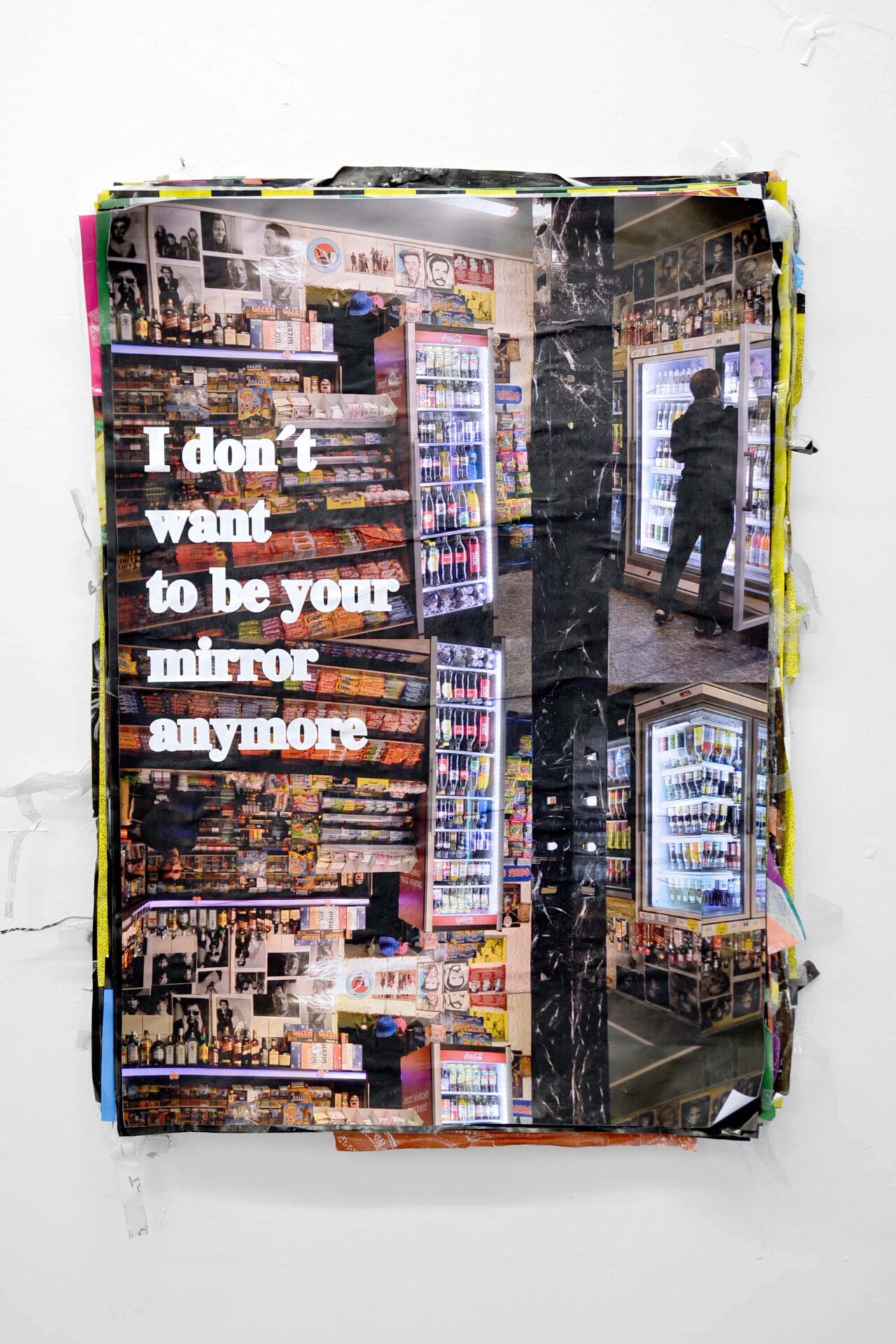
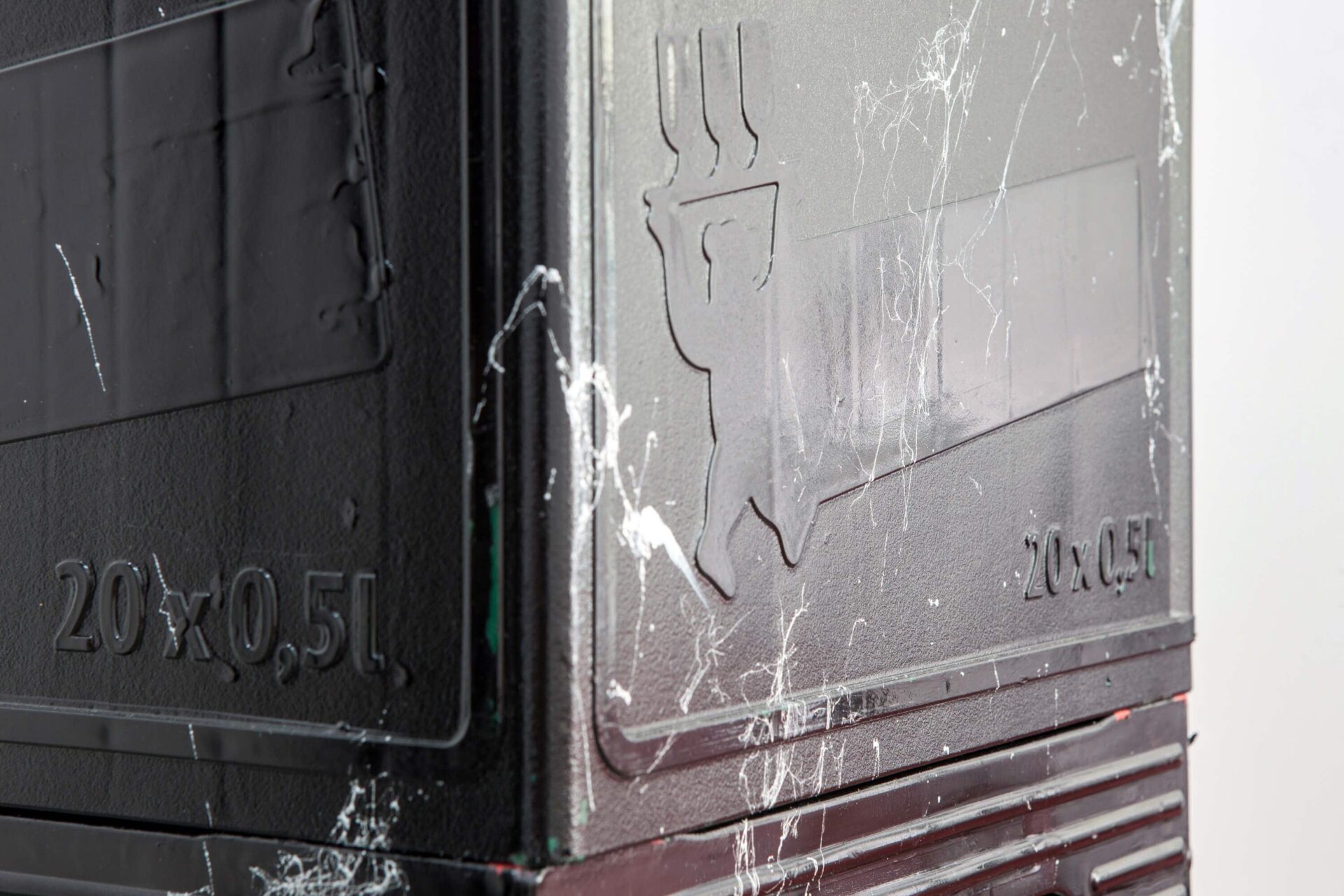
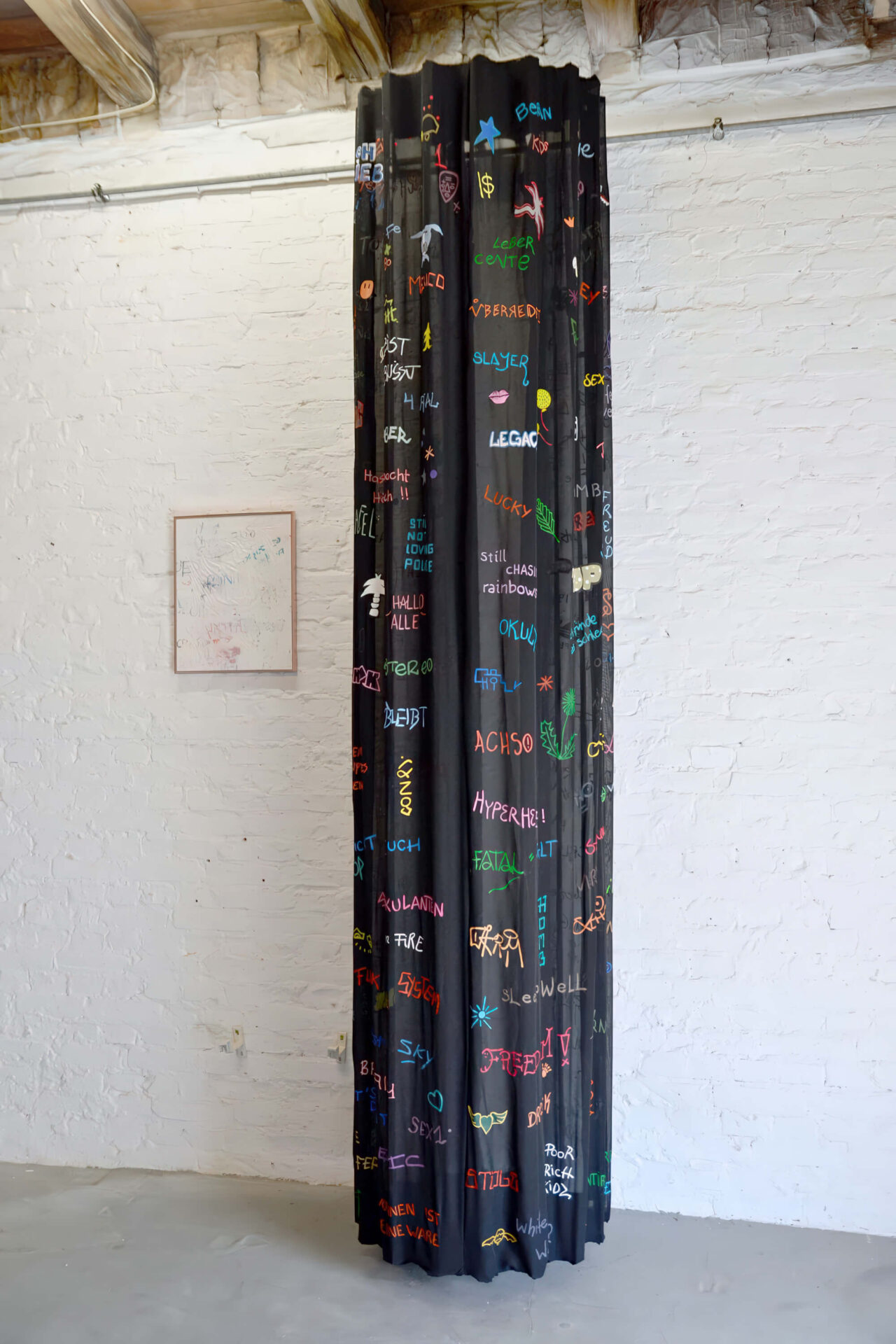
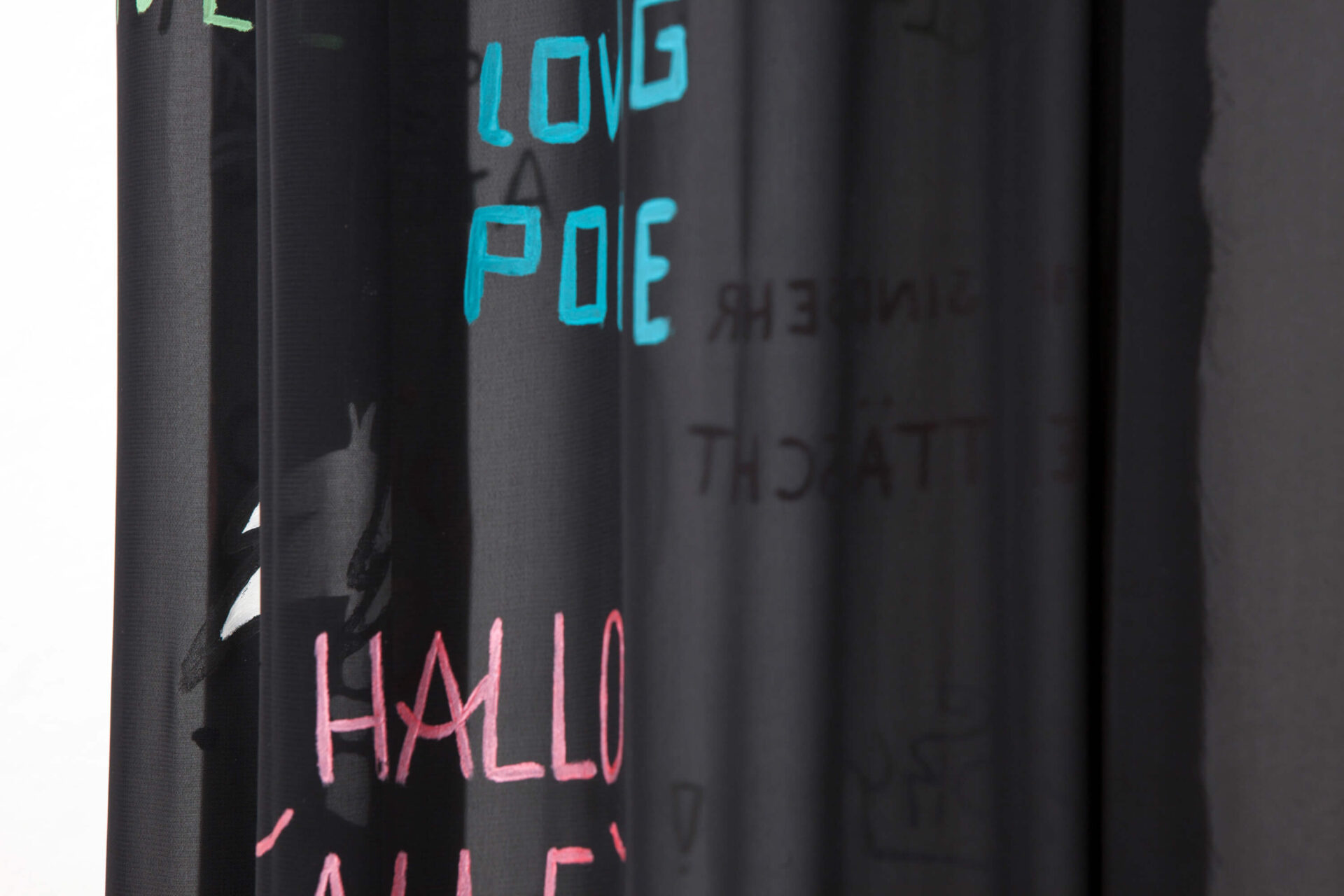
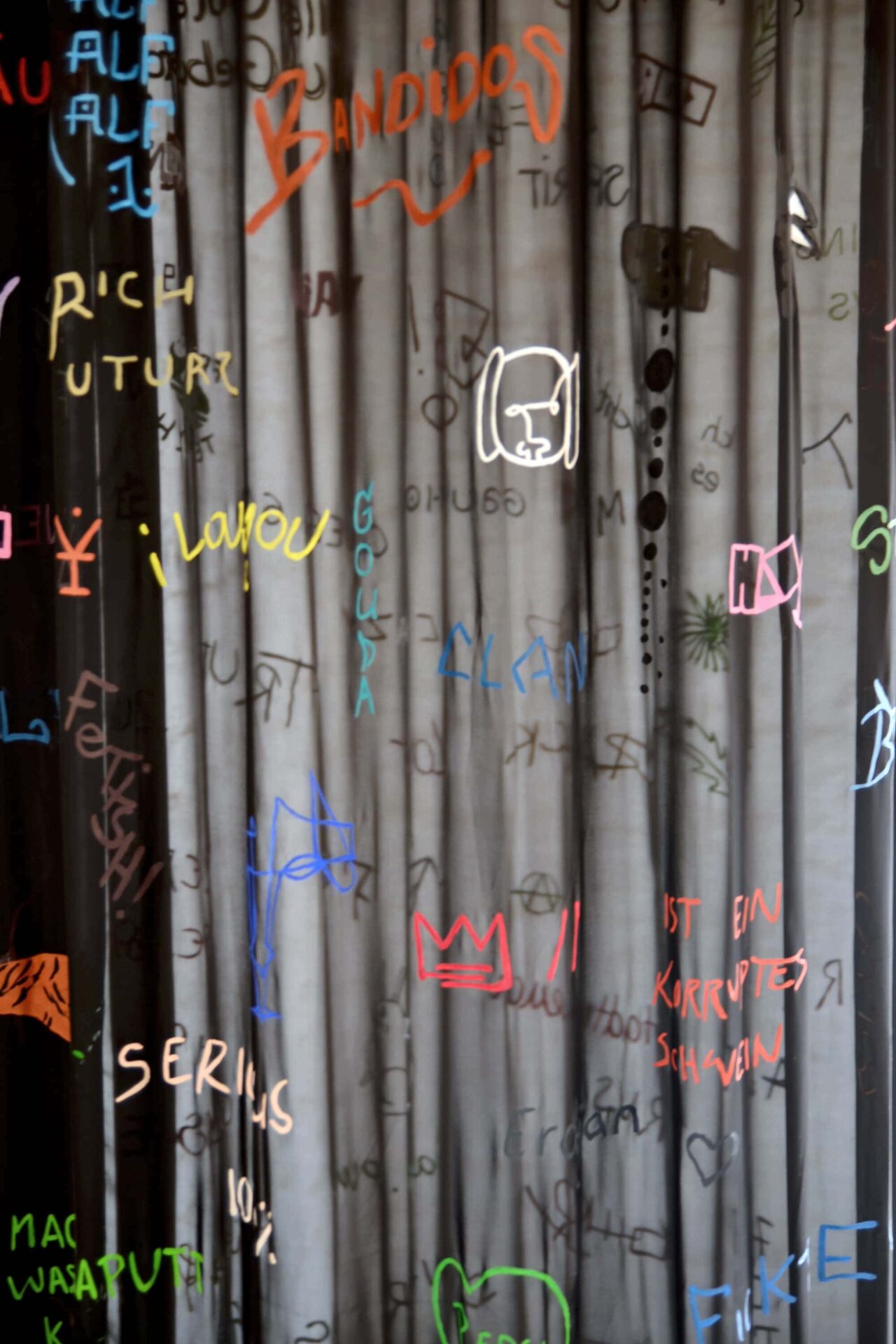
When I arrived in this city, the Neukölln neighbourhood was a kind of “No one’s Land”. The Späti International was, and still is, on Weserstrasse, in the middle of this neighbourhood. Only now, going inside it is no longer an adventure.
The International had a “secret” back room, which was accessed by opening a curtain. There was no door. Artists of all kinds gathered here. There were drawings everywhere of Marilyn Monroe, or perhaps Elvis. People drank Sterni and were allowed to smoke inside. I was never sure if the performances were scheduled.
Once, someone showed up wearing a pink balaclava, Pussy Riot style, and read us a poem about forgiveness that made me cry.
Person in the pink balaclava: please contact me and read me that poem again.
Monument to the Späti International, 2018
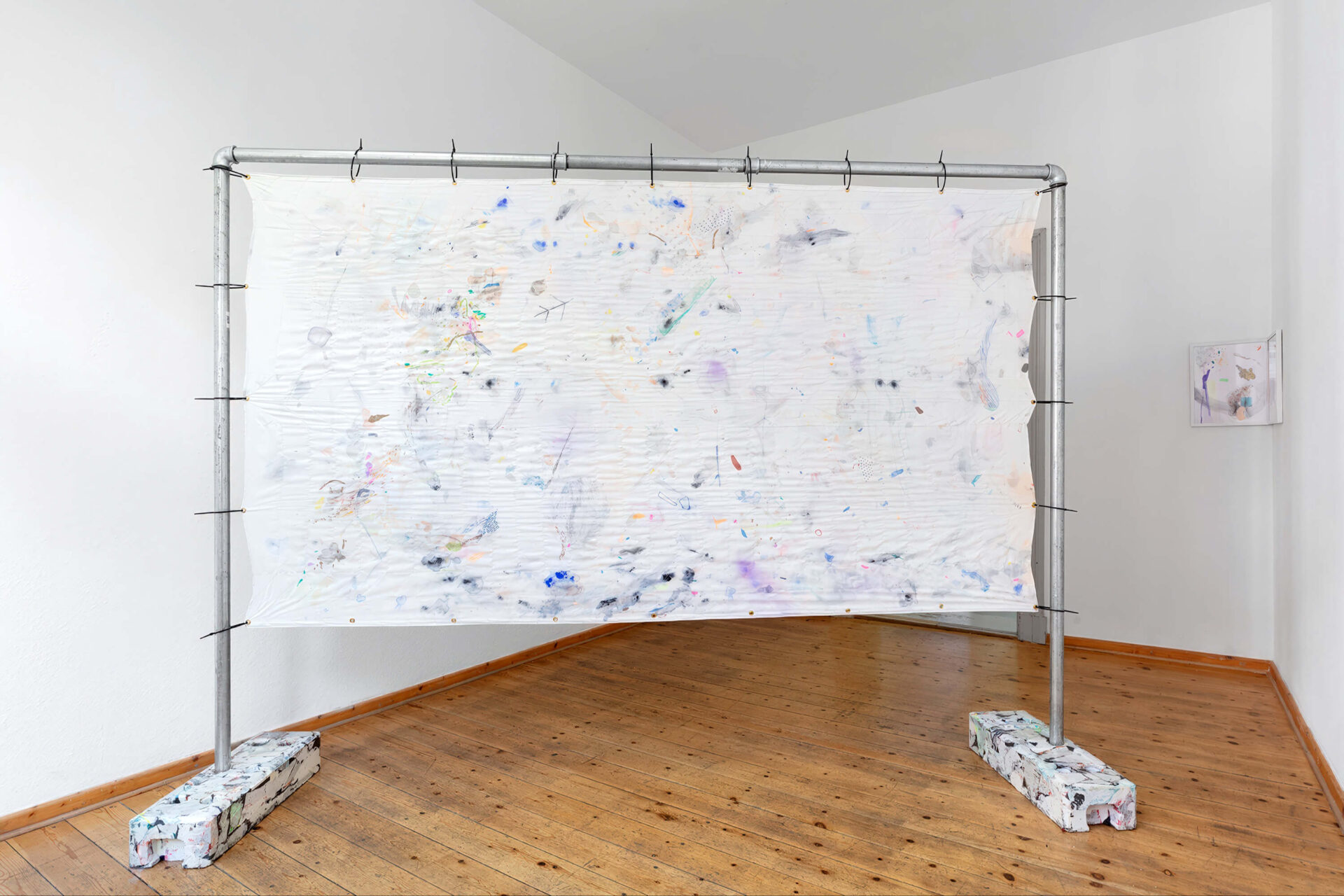
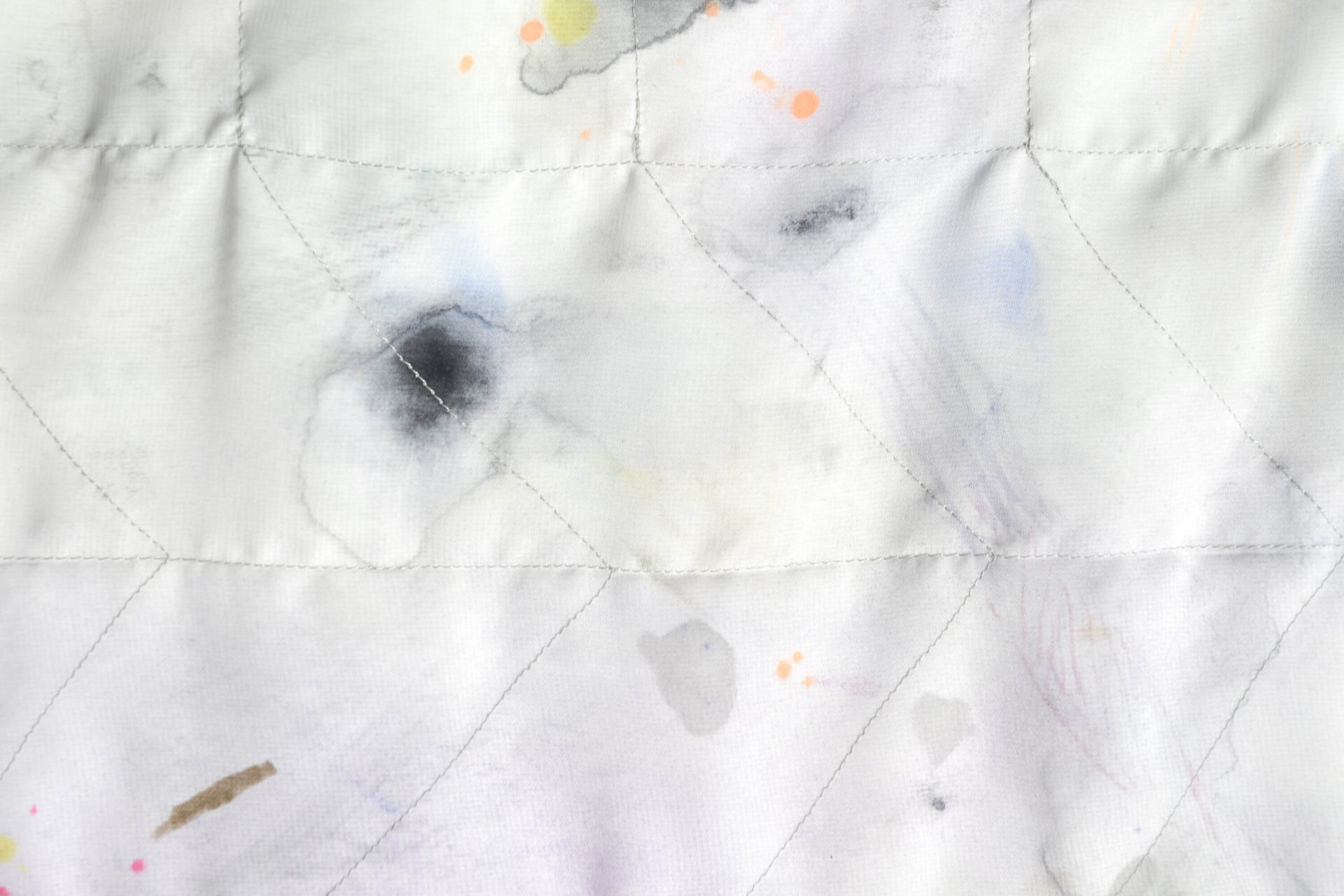
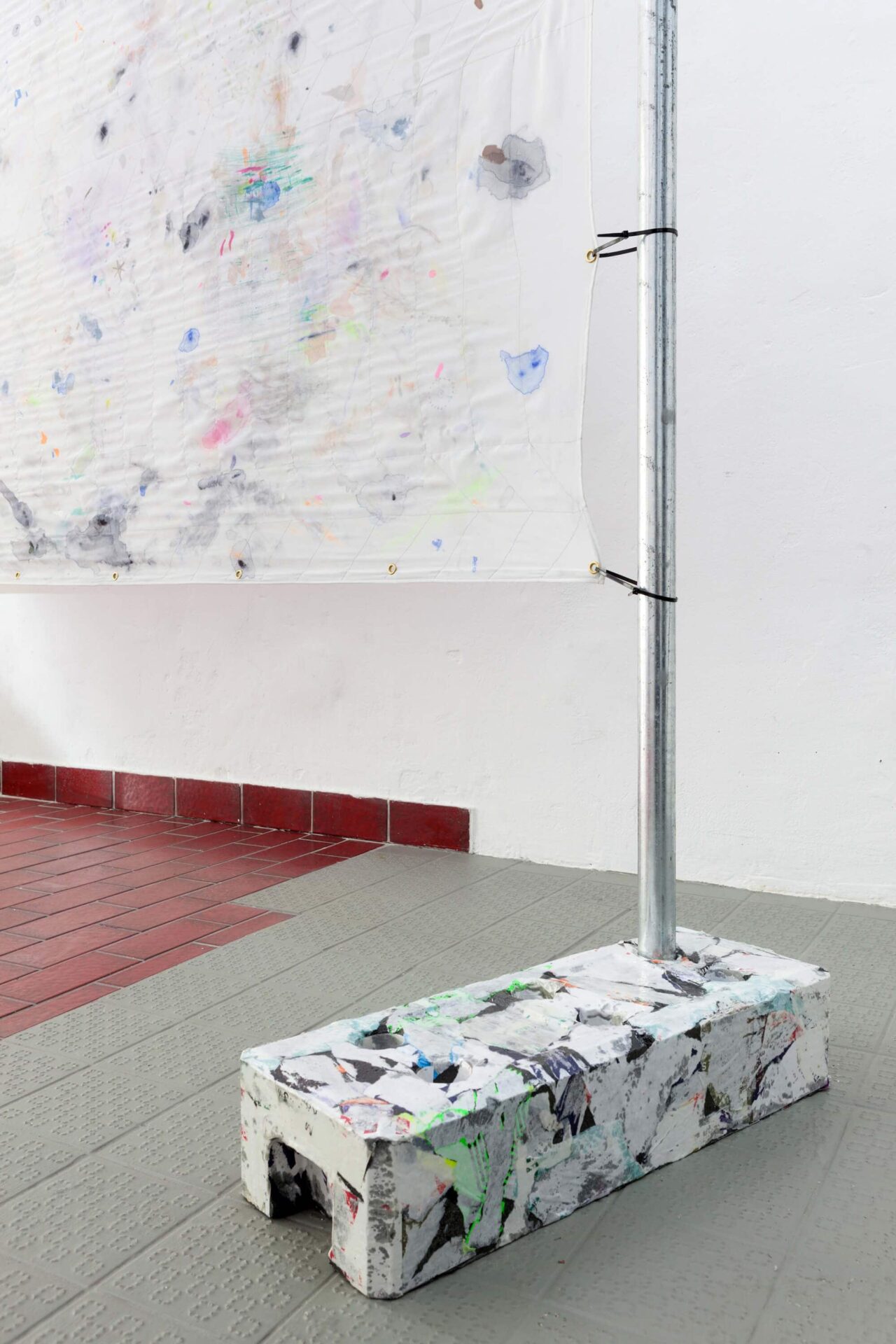
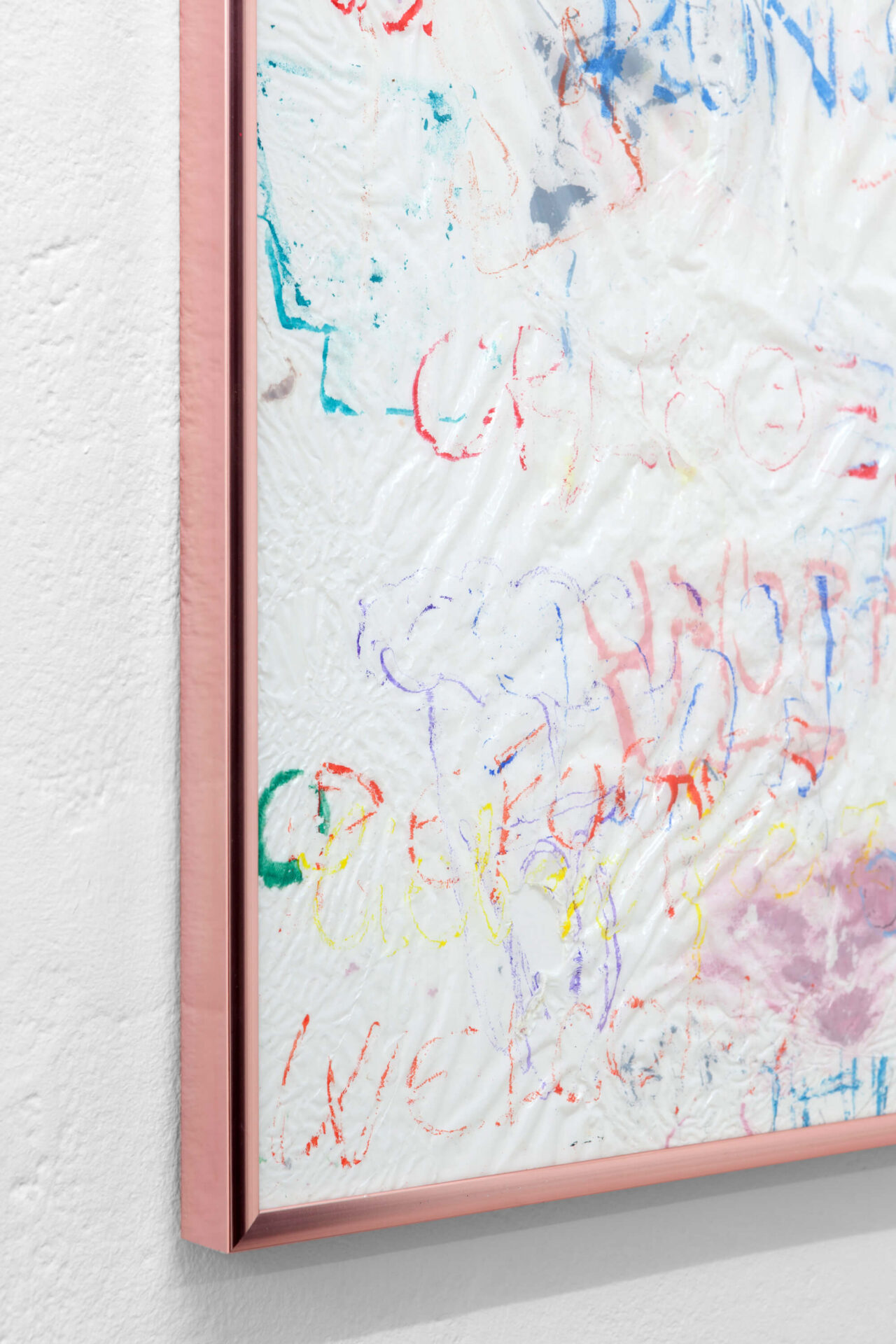
For a while, I was an artist without a studio. I only had a very small space in my room where I could work, so I decided to paint, erase, and paint again on the same surface, a white fabric. I used my washing machine to erase. I hung the fabric in the bathroom to dry.
Not everything was erased; something always remained, but it didn’t matter. I liked the idea of not being able to choose or predict what would be erased. Just like memory, some strokes remained, others were erased forever, and now only fragments of what it was can be seen, never the whole story.
I don’t know how many times I ran the washing machine.
The Time I used to Wash my Paintings, 2018
An investor has purchased the entire building where my studio is located. The walls of the building are covered with written words and secret, half-erased messages.
Dear Investor:
If you like to speculate – on the facade, on the walls leading to the courtyard, and on the wall behind the trash bins – there are a lot of half-erased messages that you could try to decipher and connect. They look like a conversation! Some have little drawings, like contemporary hieroglyphics.
Come see! Perhaps you will discover new speculative worlds and leave behind the speculations you have been making up until now!
Speculating to Decipher Meaning, 2018-2019
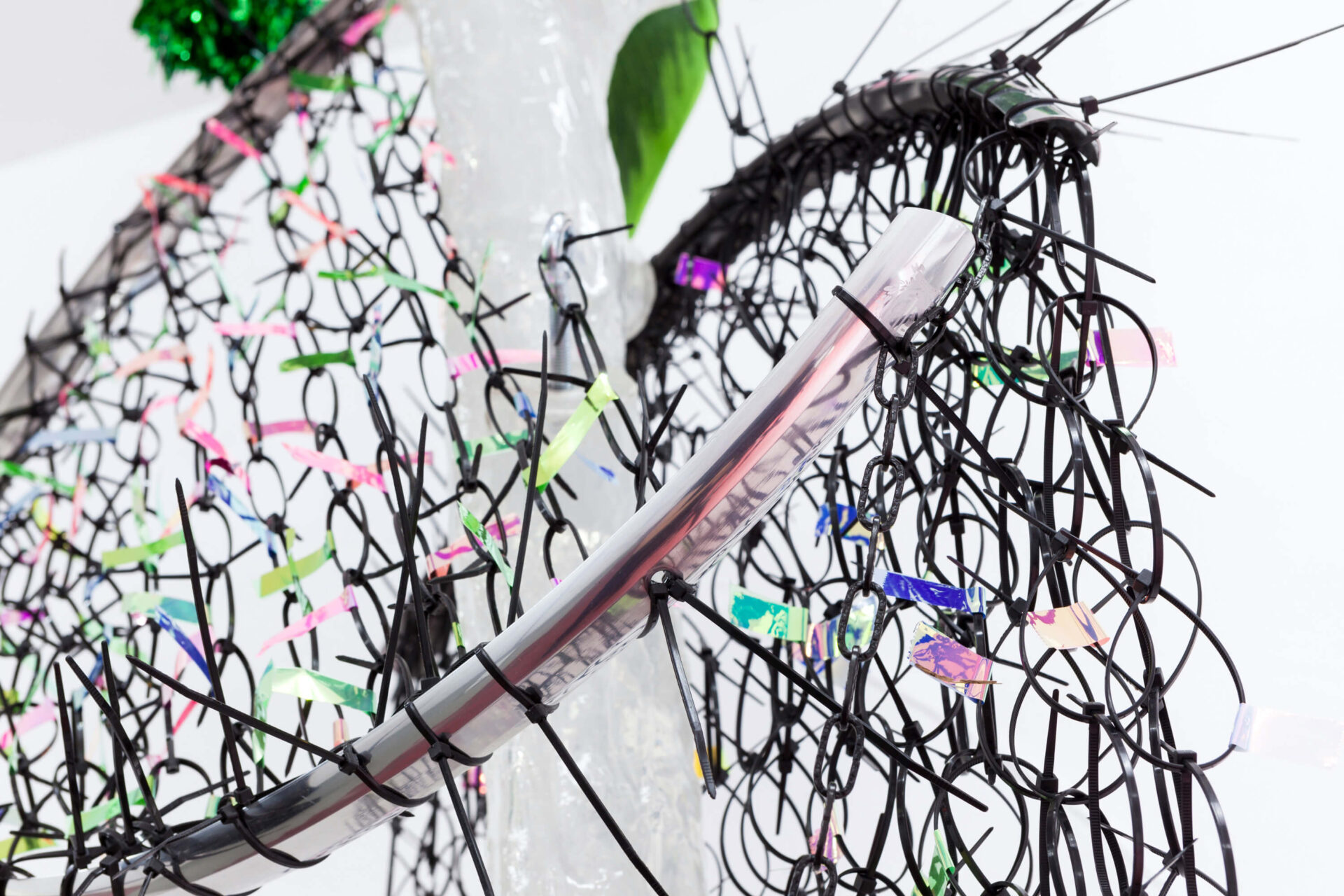
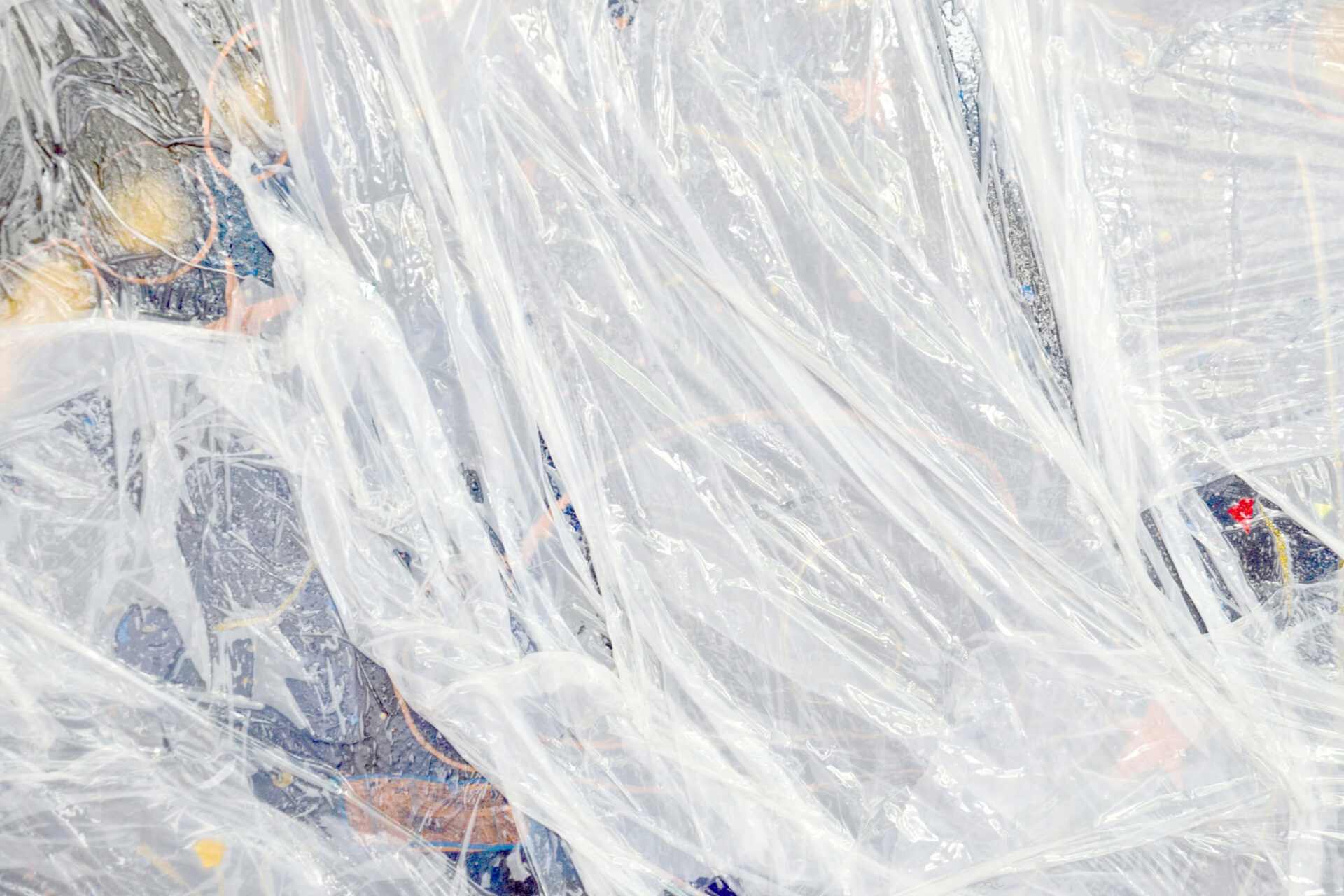
Thank you, Jane Bennett, for your book “Vibrant Matter”.
Without your inspiration, I wouldn’t have been able to find the fake diamond, nor the plastics I used to make this piece.
Berlin Matter, 2019
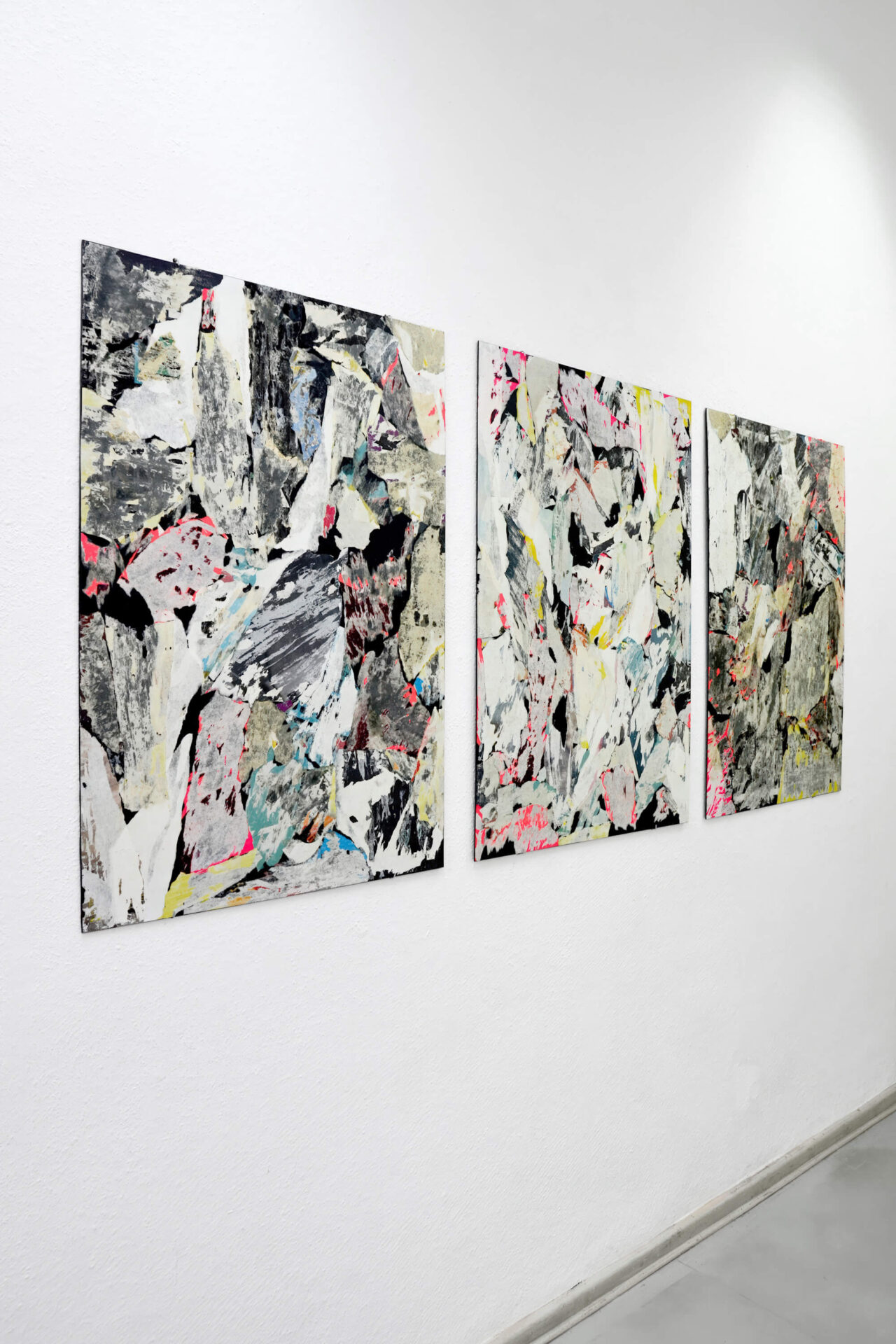
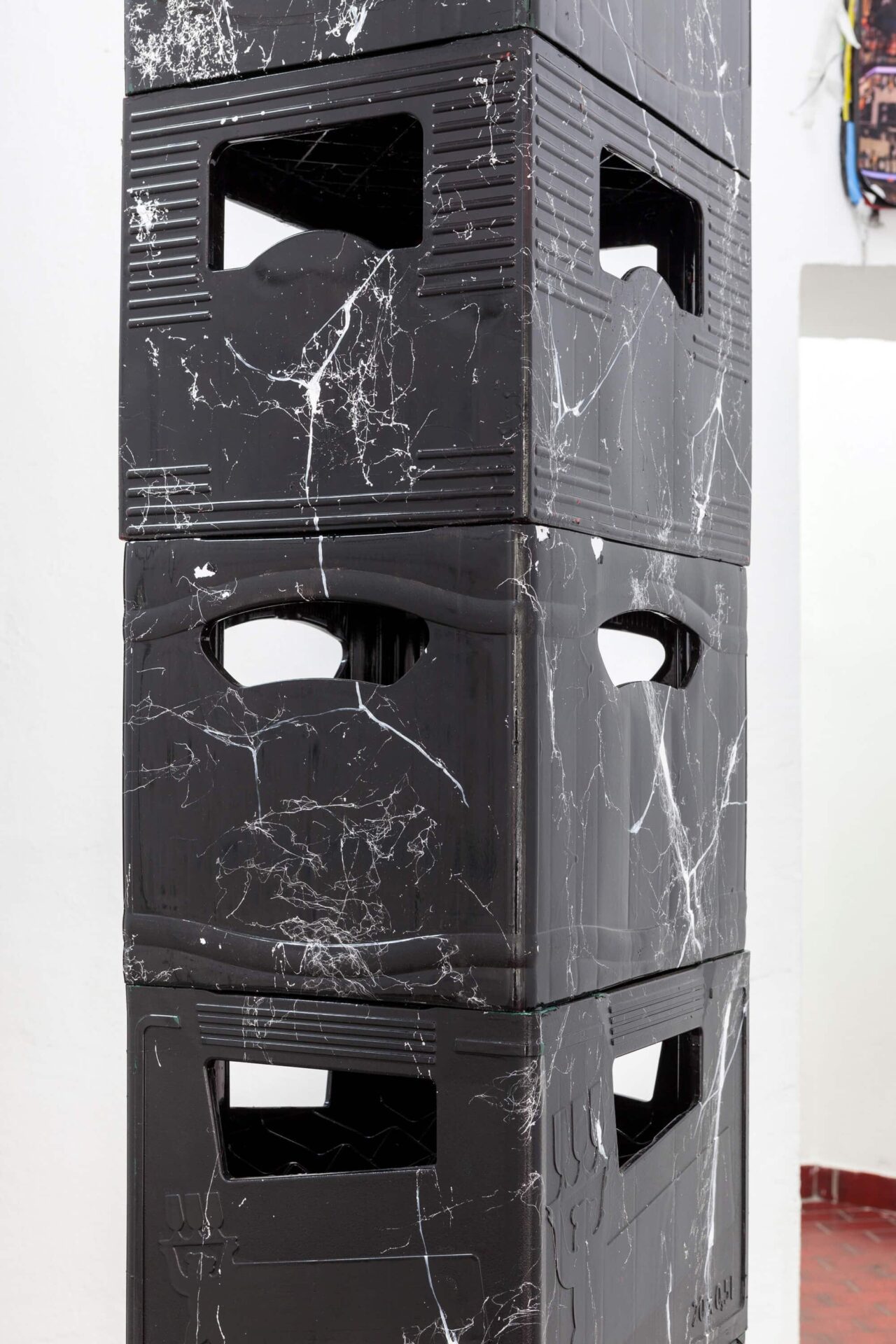
Spain never experienced a Romantic era at the same time as other countries. While other parts of Europe were constructing neoclassical buildings, imitating the beauty of ancient Greece and Rome, Spain was embroiled in civil war. No melancholic poems were written; no intellectual sadness driven to suicide by forbidden love was felt. No paintings adorned with flowers were created, nor were ruins deliberately constructed. The word “Sehnsucht” doesn’t even exist in Spanish. It cannot be translated; it never happened.
From that era, we are left with images of the horrors of war painted by Goya.
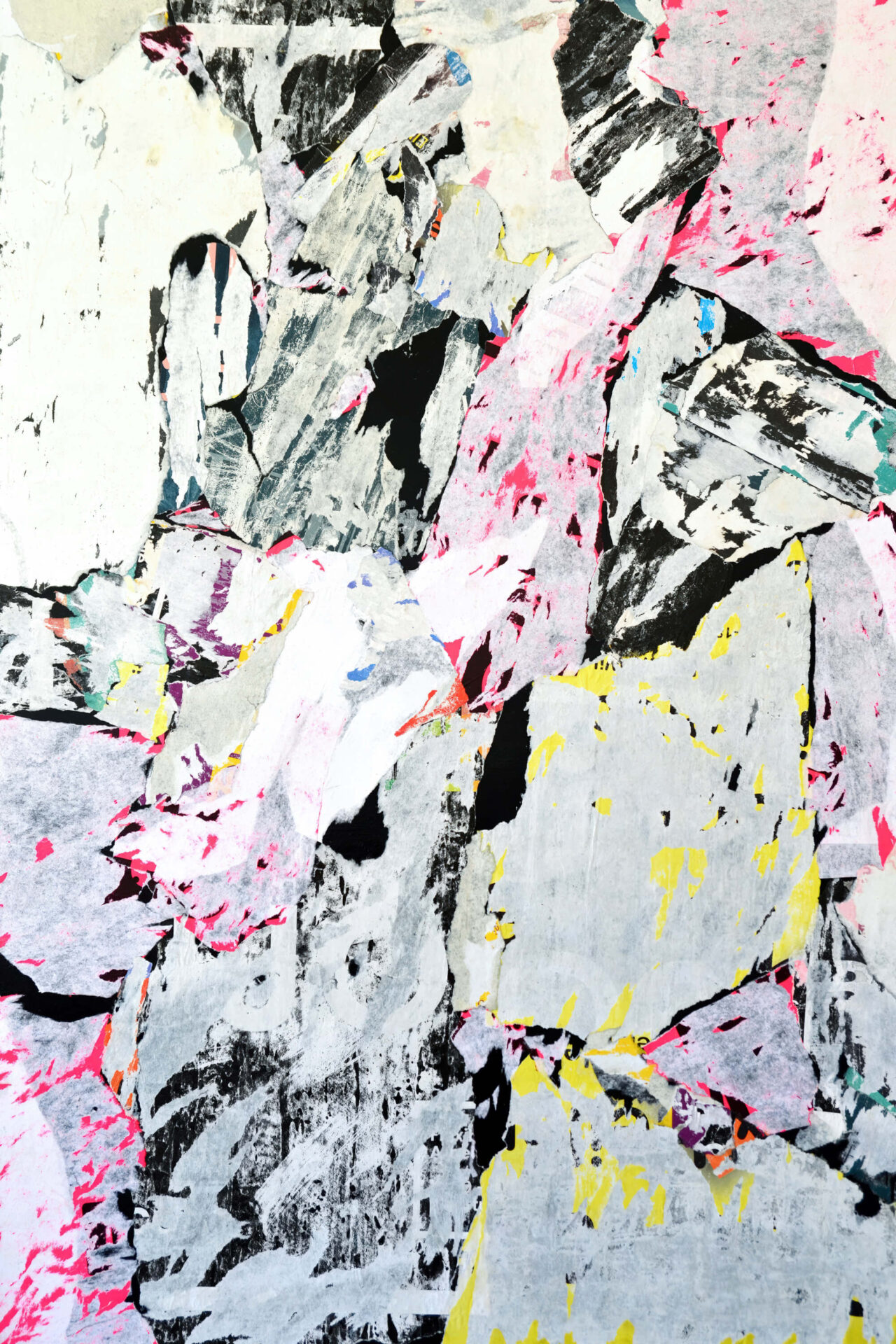
In Prussian Romanticism, villa walls were painted to imitate marble. It was an expensive technique. Painting a wall to imitate marble was more expensive than covering it with genuine marble. The imitation was more valuable than the original.
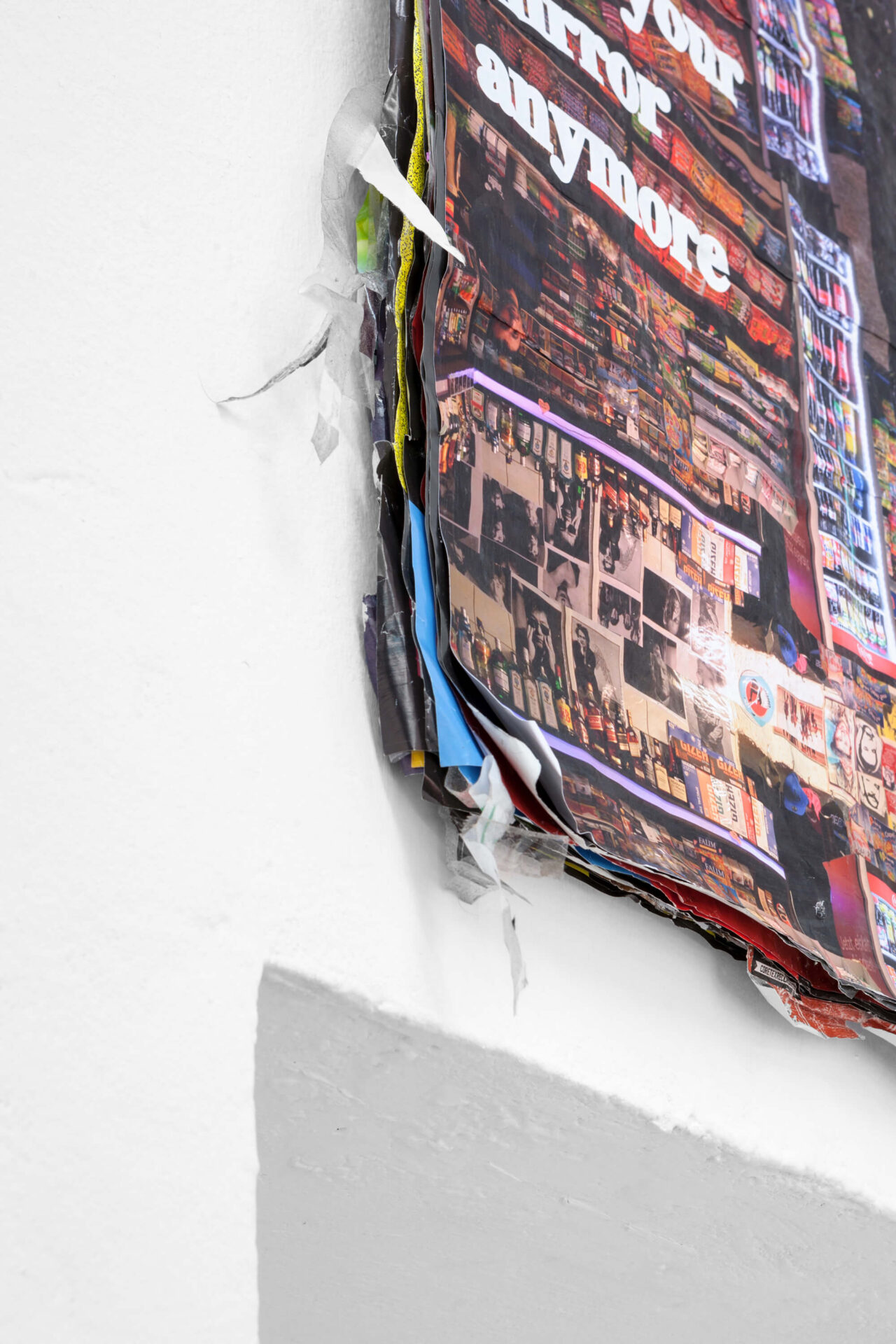
In the streets of Berlin, I often encounter a similar scene. There are walls covered in fake marble. Only, no one has painted them. They’re remnants of posters that have faded and worn away, resembling marble. It’s a very decadent scene, a ruin not created intentionally.
I think it’s the most romantic thing I’ve ever seen.
Ultra Romantic, 2020
“Das Kiez Monument” is a multidisciplinary art installation featuring painting and sculpture with a focus on collective memory and participation. It aims to propose alternative ways of representing memory in the public space.
The exhibition takes place in Centrum in Neukölln and for the central piece, the neighbours in the surrounding area got to decide about the content and execution, tackling the underlying question: how do they want to be remembered in the future? In short, this project wants to give a voice to the people who usually don’t have a say when it comes to writing their own history.
The Flughafenkiez in Neukölln is a very cosmopolitan neighbourhood and especially since the economic crisis started in 2008, it became a meeting point for people from many different cultures and backgrounds who settled in this neighbourhood. Thus, this project aims to highlight the complexities of the Reuterstraße and its surroundings [history, population, languages…] and explores alternative ways of capturing it.
In Patricia’s own words: “with this project I want to come to terms with the current debate around collective memory and how we represent it today in the form of monuments or public sculptures. I am particularly interested in the democratic potential of monuments, namely by having the people participate in the conception and production of said monument. I want to call people’s attention to the fact that we need more involvement and decision making from citizens when it comes to representing their memory or lives in the public space”.
Finally, this project is also intended as an “ecological” work of art which reflects on the materiality of our surroundings today, suggesting the ruins of our times.
Aurica Kastner
Curatorial Text for the exhibition “Das Kiez Monument”
Centrum, Berlin, 2019
